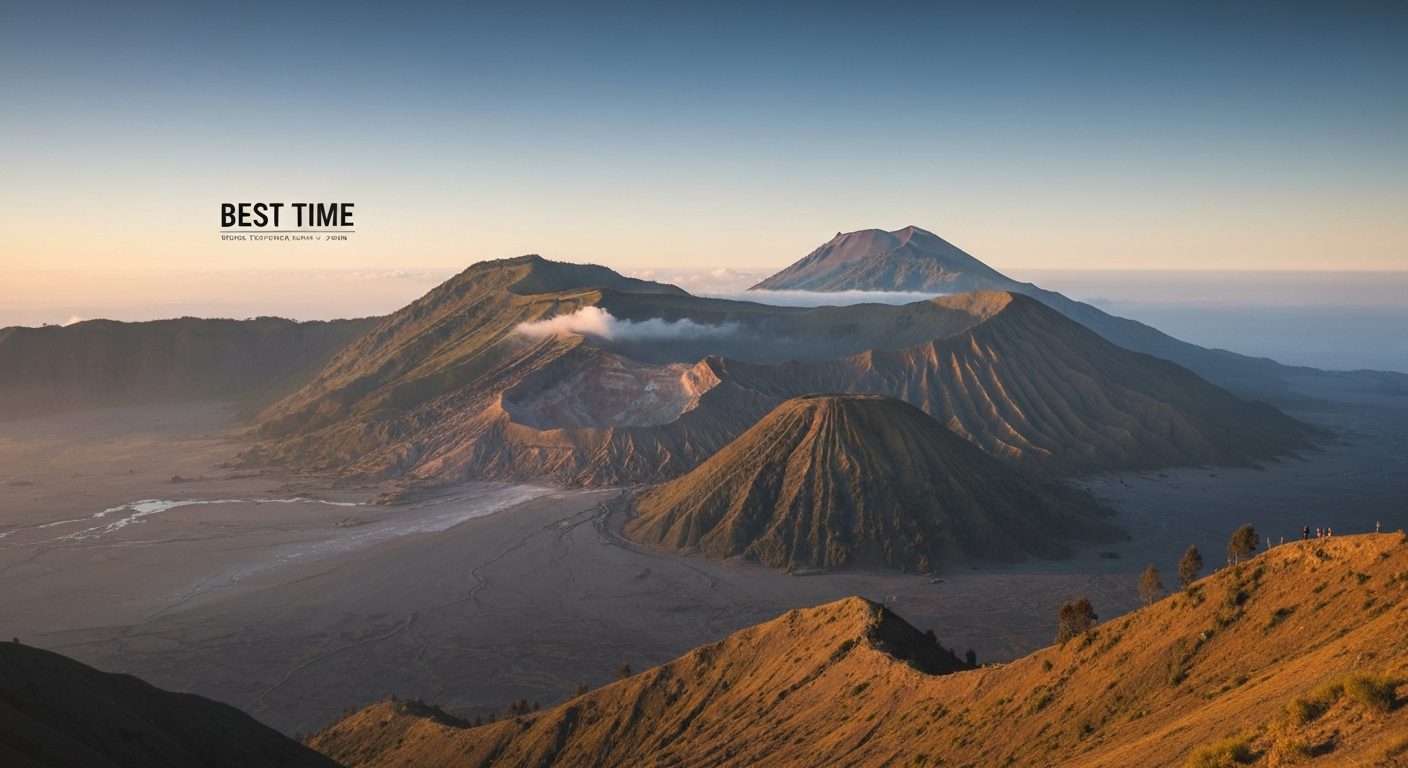
When considering the best time to visit Mount Bromo, the simplest answer is during Indonesia’s dry season, which runs from May to October. This period offers the highest probability of clear skies for sunrise views, stable trekking conditions, and the most reliable jeep experiences across the Sea of Sand.
As someone who has timed countless sunrises from Penanjakan and navigated the dusty trails of the Tengger caldera for over a decade, I can tell you that while the dry season is indeed prime, Mount Bromo has a different character in every month, each with its own trade-offs. This guide, built on years of on-the-ground logistics and observation, will help you understand the nuances of weather, crowds, and prices so you can plan your private tour with confidence.
Understanding Mount Bromo’s Seasons: Dry vs. Rainy
Mount Bromo experiences two primary seasons: the dry season and the rainy season. Each brings distinct conditions that impact your visit, from visibility for the iconic sunrise to the comfort of your jeep journey. Choosing the bromo best time to visit season involves balancing factors like weather, crowd density, and tour pricing.
The Dry Season: May to October
This is widely considered the bromo tour best season dry vs rainy for good reason. During these months, rainfall is minimal, skies are generally clear, and the air is crisp. This translates to higher chances of an unobstructed view of the caldera, Mount Semeru, and the surrounding landscape from viewpoints like Penanjakan 1 or King Kong Hill. The trails around the crater are dry and less slippery, making the ascent easier.
However, “dry” doesn’t mean warm. Mount Bromo sits at an elevation of around 2,329 meters (7,641 feet) above sea level. Even in the dry season, temperatures, especially before dawn, can drop significantly, often nearing freezing point in July and August. You’ll need layers, gloves, and a warm hat. Another consideration is crowd levels. The dry season, particularly July and August, coincides with school holidays and peak tourist travel, meaning more people at the viewpoints and on the trails.
The Rainy Season: November to April
The rainy season brings a different kind of beauty and experience to Mount Bromo. While daily rainfall is common, it often occurs in the afternoon, leaving mornings relatively clear, especially earlier in the season. The landscape transforms, becoming greener and more vibrant. Volcanic ash is washed away, and the air feels cleaner.
A common question is about bromo sunrise in rainy season. While the odds of a perfectly clear sunrise are lower due to increased cloud cover and morning mist, moments of dramatic cloud formations or breaks in the clouds can offer unique photographic opportunities. The biggest advantage of the rainy season is significantly fewer crowds. You’ll often find more space at viewpoints, on jeep trails, and around the crater, allowing for a more serene experience. Prices for accommodation and local services also tend to be lower during this period. The bromo dry season vs rainy season sunrise tour trade-off is often clear views for more solitude and potentially better value.
The Sweet Spot: Best Time to Visit Mount Bromo for Sunrise
If your primary goal is the classic, unobstructed sunrise view, then late May, June, September, and early October are ideal. The absolute best time to visit Mount Bromo for sunrise for peak clarity often falls in July and August, but these months are also the coldest and most crowded.
During July and August, the air is typically driest, leading to exceptional visibility across the caldera. However, this clarity comes with strong winds and temperatures that can plummet to 0-5°C (32-41°F) before sunrise. Expect packed viewpoints and longer queues for jeeps and at the crater steps. It’s a trade-off: guaranteed crowds and cold for statistically better views.
For those seeking a balance of good clarity, manageable crowds, and slightly milder temperatures, late May, June, or September offer a compelling alternative. Early October can also be beautiful, though the chances of afternoon rain start to increase as the season transitions.
Mount Bromo Weather by Month: A Detailed Breakdown
Understanding mount bromo weather by month is crucial for setting expectations. Here’s a month-by-month guide, detailing sunrise clarity odds, temperature, crowd levels, and price implications. This data is based on years of observations and local knowledge.
Mount Bromo Monthly Planning Guide (Last verified June 2026)
- May
-
Sunrise Clarity Odds: Good. Transitioning into dry season, increasing chance of clear skies.
Temperature Range: Cool mornings (8-15°C / 46-59°F), mild days.
Crowd Level: Moderate. Picking up but not peak.
Price Implications: Standard dry season rates. - June
-
Sunrise Clarity Odds: Very Good. Stable dry season weather, high chance of clear views.
Temperature Range: Cold mornings (5-12°C / 41-54°F), cool days.
Crowd Level: Moderate to High. Popular month.
Price Implications: Standard dry season rates. - July
-
Sunrise Clarity Odds: Excellent. Peak dry season, highest probability of crystal-clear sunrises. This is often seen as the absolute bromo sunrise July August vs December February winner for clarity.
Temperature Range: Very Cold mornings (0-8°C / 32-46°F), cool days. The coldest month at Mount Bromo temperature often occurs in July and August.
Crowd Level: High. Peak tourist season. Expect significant crowds.
Price Implications: Higher demand, potentially slightly increased rates for accommodation. - August
-
Sunrise Clarity Odds: Excellent. Continues peak dry season, very high chance of clear sunrises.
Temperature Range: Very Cold mornings (0-8°C / 32-46°F), cool days. Continues to be one of the coldest months.
Crowd Level: High. Peak tourist season.
Price Implications: Higher demand, potentially slightly increased rates for accommodation. - September
-
Sunrise Clarity Odds: Very Good. Still strong dry season conditions, good clarity.
Temperature Range: Cold mornings (5-12°C / 41-54°F), cool days.
Crowd Level: Moderate. Crowds start to thin slightly after peak season.
Price Implications: Standard dry season rates. - October
-
Sunrise Clarity Odds: Good. Late dry season, generally clear but increasing chance of afternoon showers towards month-end.
Temperature Range: Cool mornings (8-15°C / 46-59°F), mild days.
Crowd Level: Moderate.
Price Implications: Standard dry season rates. - November
-
Sunrise Clarity Odds: Fair to Good. Start of rainy season. Mornings can still be clear, but mist and clouds become more frequent.
Temperature Range: Mild mornings (12-18°C / 54-64°F), warmer days.
Crowd Level: Low to Moderate. Fewer visitors.
Price Implications: Potentially lower accommodation prices. - December
-
Sunrise Clarity Odds: Fair. Rainy season in full swing. Cloudy or misty mornings are common, but clear breaks are possible. The bromo tour December January prices are often lower due to reduced demand.
Temperature Range: Mild mornings (12-18°C / 54-64°F), warmer days.
Crowd Level: Moderate. Can see a slight bump around Christmas/New Year holidays.
Price Implications: Lower shoulder season rates, with a possible brief spike around holidays. - January
-
Sunrise Clarity Odds: Fair. Mid-rainy season. Expect clouds and mist. Patience rewarded with occasional clearings.
Temperature Range: Mild mornings (12-18°C / 54-64°F), warmer days.
Crowd Level: Low. Generally quiet after the New Year period.
Price Implications: Lower rainy season rates. - February
-
Sunrise Clarity Odds: Fair. Continues mid-rainy season. Similar to January.
Temperature Range: Mild mornings (12-18°C / 54-64°F), warmer days.
Crowd Level: Low. One of the quietest months.
Price Implications: Lowest rainy season rates. - March
-
Sunrise Clarity Odds: Fair to Good. Late rainy season, slowly transitioning. Chances of clearer mornings improve towards the end of the month.
Temperature Range: Mild mornings (12-18°C / 54-64°F), warmer days.
Crowd Level: Low.
Price Implications: Lower rainy season rates. - April
-
Sunrise Clarity Odds: Good. End of rainy season, clearer days becoming more frequent.
Temperature Range: Mild mornings (10-16°C / 50-61°F), pleasant days.
Crowd Level: Moderate. Picking up with Easter holidays and lead-up to dry season.
Price Implications: Transitioning to standard dry season rates.
Mount Bromo Crowd Levels: Peak Season and Quiet Months
The mount bromo crowd levels peak season typically aligns with the dry season, particularly July and August. During these months, you can expect Penanjakan 1 (the main viewpoint) to be very busy, with jeeps lining up well before dawn. The steps to the crater can also become congested. If you prefer a more solitary experience, you might consider alternative viewpoints, which our guides know well, or choose to visit during the rainy season.
The quietest months are generally February and March, followed by January and November. During these times, the experience feels more intimate. Fewer jeeps mean less dust on the Sea of Sand, and you’ll have more room to move at the viewpoints. This can be a significant advantage for photographers or those seeking a peaceful encounter with the landscape.
Beyond the Sunrise: Planning for Jeep and Crater Experiences
Your mount bromo sunrise tour best season to go extends to the jeep and crater experiences too. In the dry season, the jeep ride across the Sea of Sand is dusty but generally smooth. The path to the crater is firm. In the rainy season, the Sea of Sand can become muddy in places, and the path to the crater might be slippery. Our experienced local jeep operators are adept at navigating these conditions safely.
Regardless of the season, packing appropriate gear is essential. For any month, bring layers of clothing, a warm jacket, hat, gloves, and sturdy walking shoes. Even in the rainy season, mornings can be cool. During the dry season, the dust from the jeep journey and the walk to the crater means a scarf or mask can be beneficial.
Honest Expectations: Best Time vs. Worst Time Mount Bromo Sunrise Clarity
It’s important to set honest expectations. While the dry season offers the best time vs worst time mount bromo sunrise clarity, nature is unpredictable. A rogue cloud can obscure the view even in July, and a perfectly clear morning can surprise you in January. My role, and the role of Luxury Bromo Tour, is to maximize your chances and prepare you for the conditions, not to guarantee the weather.
What we do guarantee is meticulous planning and support. Luxury Bromo Tour is operated by Bali Premium Trip, a Bali-based luxury travel concierge founded in 2015. We specialize in private, expert-guided Bromo tours. We arrange all aspects of your trip, including licensed guides, park permits, and comfortable transfers. While we partner with licensed, vetted on-ground operators for services like jeeps (we don’t own park concessions), our team ensures every detail is managed to the highest standard. You book directly with our Bali Premium Trip reservations team, ensuring transparent pricing and no third-party markups.
Whether you choose the high clarity of the dry season or the serene solitude of the rainy season, we’ll design an itinerary that suits your preferences. Our private tours typically range from a 2-day/1-night Bromo-focused trip starting from a major East Java city like Surabaya or Malang, which can cost anywhere from US$350-700 per person, to more extensive 3-4 day packages including transfers from Bali, which might range from US$800-1500 per person (indicative prices, last verified June 2026, and vary by hotel choice, group size, and specific inclusions). This range provides a sense of what a luxury, private, expertly-guided experience entails, covering all logistics from door to door.
Ready to see Bromo on your terms? Our team is available via WhatsApp or email to discuss your ideal travel dates and craft a personalized itinerary.
Plan your trip to Mount Bromo with our expert team today.
Frequently Asked Questions
When is the least crowded time to visit Mount Bromo?
The least crowded months to visit Mount Bromo are typically January, February, and March. During this period, which falls in the middle of the rainy season, visitor numbers are significantly lower, allowing for a more peaceful and personal experience at viewpoints and the crater. While sunrise clarity can be more variable, the solitude offers a unique charm.
What is the coldest month at Mount Bromo?
The coldest months at Mount Bromo are generally July and August. During this peak dry season period, pre-dawn temperatures at viewpoints like Penanjakan 1 can drop to near freezing, often between 0-8°C (32-46°F). Strong winds can make it feel even colder. Warm layering, including gloves and a hat, is essential for these months.
Is it worth visiting Mount Bromo during the rainy season?
Yes, visiting Mount Bromo during the rainy season (November to April) can be a rewarding experience. While the probability of a perfectly clear sunrise is lower due to increased cloud cover and mist, you’ll benefit from significantly fewer crowds, often lower prices for accommodation and local services, and a lush, greener landscape. Unique cloud formations can also offer dramatic photographic opportunities. Our guides are skilled at finding the best views even on overcast days.
How far in advance should I book my Mount Bromo tour?
For private tours, especially during the peak dry season (June-August) or around major holidays (Christmas, New Year, Easter), I recommend booking at least 3-6 months in advance. This ensures availability for your preferred dates, accommodation, and our expert guides. For the rainy season or shoulder months, booking 1-2 months ahead is usually sufficient. Our Bali Premium Trip reservations team can confirm real-time availability and assist with urgent bookings when possible.
What should I pack for a Mount Bromo sunrise tour?
Regardless of the season, crucial items include warm layers (jacket, fleece, long-sleeved shirt), a hat, gloves, a scarf or mask (for dust/cold), sturdy walking shoes or hiking boots, and a small backpack for water and snacks. Sunscreen and sunglasses are also recommended once the sun rises. During the rainy season, a waterproof jacket or poncho is advisable.