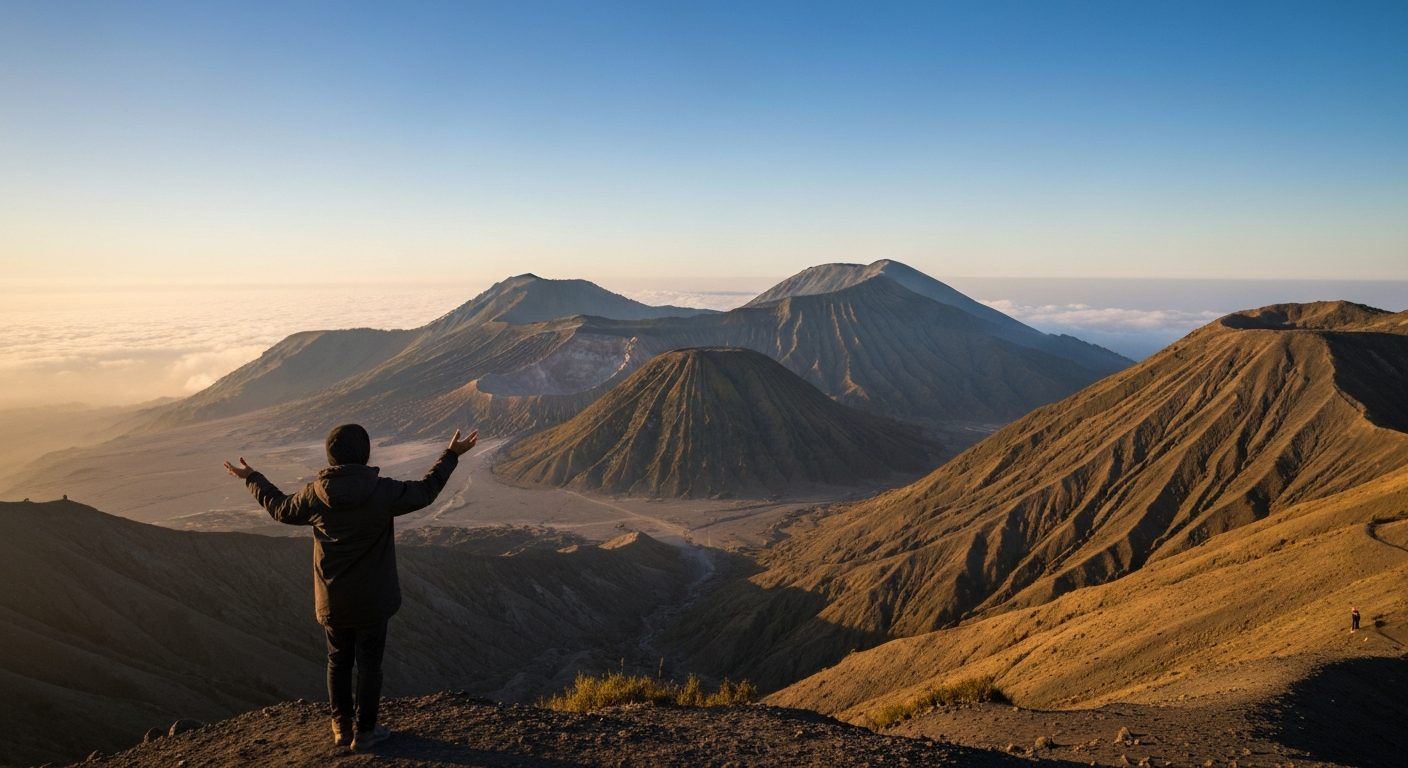
For a Mount Bromo sunrise, you need to dress warmly. The number one mistake first-time visitors make is underestimating the pre-dawn alpine chill at altitude, even on the equator. As someone who has spent more mornings than I can count standing in the cold at 3 AM making sure everything runs smoothly for your Bromo jeep tour, I can tell you exactly what to wear for Mount Bromo sunrise to stay comfortable.
Mount Bromo, rising from the ancient caldera of Tengger, offers an extraordinary sunrise experience. It’s truly a sight. However, the magic of dawn over the volcanic landscape comes with a significant temperature drop. You will be visiting viewpoints at over 2,770 meters above sea level. This means cold, sometimes near-freezing, conditions before the sun appears.
The Mount Bromo Cold: Expect Near-Freezing Temperatures
Many travelers arrive in East Java from the tropical warmth of Bali, Surabaya, or Probolinggo. They expect equatorial heat. Mount Bromo shatters that expectation. Before dawn, the air at the Penanjakan viewpoints (Penanjakan 1, Seruni Point, King Kong Hill, etc.) and on the Sea of Sand gets genuinely cold.
So, how cold is Mount Bromo sunrise? Temperatures commonly range from 3°C to 10°C (37°F to 50°F) in the hours before sunrise. When you add the wind chill factor, especially at exposed viewpoints, it can feel even colder. It’s a sharp contrast to the warmth you left behind. A proper layering system is crucial.
Bromo Sunrise Temperature by Month: A Seasonal Look
While the overall temperature range remains consistently cool before dawn, there are subtle seasonal variations.
- Dry Season (May to October)
- Often the coldest months. Temperatures can dip to the lower end of the 3-5°C range, sometimes even lower in the peak of the dry season (July-August). The air is drier, leading to clearer skies but also more pronounced radiative cooling at night. This is when you’ll most appreciate heavy insulation.
- Wet Season (November to April)
- Generally slightly warmer, often in the 6-10°C range. However, the chance of rain is higher. While rain might not typically occur at sunrise, the air can be damp. A waterproof outer layer becomes even more important. Fog or cloud cover can also be more frequent, potentially obscuring the view, but the landscape still holds its unique drama.
Regardless of the month, the key takeaway is that you will be cold without adequate preparation. Don’t let the calendar trick you into thinking it’s ever truly “warm” at Bromo before sunrise.
The Layering System That Works: Jacket and Layers Needed for Bromo Cold
The secret to staying warm and comfortable at Mount Bromo is a good layering system. This isn’t just about piling on clothes; it’s about smart choices that allow you to adapt as conditions change – from the initial cold wait to the warmer post-sunrise trek.
Layer 1: Base Layer (Moisture-Wicking)
This is the layer closest to your skin. Its primary job is to manage sweat. Even when it’s cold, a short walk or climb can make you perspire. Cotton is a poor choice here; it absorbs moisture and stays wet, making you feel colder.
- What to look for: Long-sleeved top and bottom made from merino wool or synthetic materials (polyester, polypropylene).
- Why it works: These fabrics wick sweat away from your body, helping it evaporate and keeping you dry and warm.
Layer 2: Mid-Layer (Insulation)
This layer provides warmth by trapping air. It’s your main source of insulation against the cold.
- What to look for: A fleece jacket (200-300 weight) or a lightweight down jacket/vest.
- Why it works: Fleece is breathable and quick-drying. Down offers excellent warmth-to-weight ratio. You might even wear two mid-layers if you’re particularly sensitive to cold or visiting during the dry season.
Layer 3: Outer Layer (Shell/Jacket)
This is your protection against wind and, potentially, rain. Even on a clear morning, the wind at Bromo’s viewpoints can be biting.
- What to look for: A waterproof and windproof jacket. It doesn’t need to be heavily insulated itself if your mid-layers are sufficient. A good hard shell or soft shell jacket works well.
- Why it works: It blocks the wind, which is a major factor in feeling cold, and protects you from any unexpected drizzle or mist.
Luxury Bromo Tour understands that not everyone travels with a full alpine wardrobe. For our private tours, we provide high-quality, clean, warm jackets as an extra layer for our guests. We also make sure you have hot drinks to help warm you from the inside out. This small detail makes a big difference when you’re waiting for the sun to break the horizon.
Essential Footwear for Bromo: Bromo Trekking Shoes vs Sneakers
Your choice of footwear is more important than you might think for a Bromo sunrise experience. You’ll be walking on varied terrain, from dusty tracks to ash-covered slopes and potentially slippery steps.
Let’s address bromo footwear sandals hiking boots options directly:
- Sandals: Absolutely not. Do not wear sandals. The Sea of Sand is dusty, uneven, and the climb to the crater rim involves loose volcanic scree and steep steps. Your feet will get dirty, cold, and likely injured.
- Flip-flops: Even worse than sandals. Leave them for the beach.
- Casual sneakers (e.g., canvas shoes): While better than sandals, light canvas sneakers offer minimal warmth, poor grip, and will quickly fill with fine volcanic ash. They’re acceptable for the jeep ride but not ideal for the trekking portions.
- Running shoes/Athletic sneakers: A much better option. They provide better cushioning, support, and often more grip than casual sneakers. They’ll handle the dust and steps reasonably well, though they might still get quite dirty. Choose ones with good tread.
- Bromo trekking shoes / Hiking boots: This is the ideal choice.
- Protection: Hiking boots offer ankle support, crucial for uneven terrain. They keep out dust and small stones.
- Warmth: They are typically insulated and keep your feet much warmer.
- Grip: Their robust soles provide excellent traction on loose surfaces and steps.
- Durability: Designed for rugged conditions, they will withstand the environment better.
When comparing bromo trekking shoes vs sneakers, trekking shoes or lightweight hiking boots are always superior for comfort, safety, and warmth. If you don’t own hiking boots, sturdy athletic sneakers with good tread will suffice, but be prepared for them to get dusty.
The Complete Bromo Packing List: What to Bring Bromo Jeep Tour Checklist
Here’s your comprehensive bromo packing list what to bring to ensure a comfortable and enjoyable Bromo sunrise experience. This covers everything you need for your what to bring bromo jeep tour checklist.
Clothing Checklist:
- Base Layers: Long-sleeved thermal top and bottom (merino wool or synthetic).
- Mid-Layers: Fleece jacket or lightweight down jacket/vest.
- Outer Layer: Windproof and waterproof jacket. (Luxury Bromo Tour provides a warm jacket as an extra layer).
- Pants: Comfortable, warm trousers. Jeans are acceptable, but synthetic hiking pants or warmer casual trousers are better. Avoid shorts.
- Socks: Thick, warm socks (wool or synthetic). Bring an extra pair if you tend to get cold feet.
- Hat: A warm beanie or wool hat that covers your ears. Essential for heat retention.
- Gloves: Warm gloves. Your fingers will get cold quickly waiting for sunrise.
- Scarf or Neck Gaiter: Provides extra warmth and protection for your neck and face against cold wind and dust.
- Footwear: Sturdy closed-toe shoes with good grip (hiking boots or robust athletic sneakers are best).
Personal Items & Gear:
- Small Backpack: For carrying your water, snacks, camera, and any layers you might shed later.
- Water Bottle: Stay hydrated. Even in the cold, you’re at altitude.
- Snacks: Energy bars, fruit, or local treats for the early morning.
- Sunscreen: Critical for after sunrise. The UV index at altitude is high.
- Sunglasses: Protect your eyes from the bright post-sunrise sun and dust.
- Camera & Extra Battery: You’ll want to capture the views. Cold drains batteries faster.
- Headlamp or Small Torch: While jeeps have lights, a personal light is useful for walking in the dark, especially if you climb to the crater rim before full daylight.
- Wet Wipes/Hand Sanitizer: Useful for cleaning up after touching dusty surfaces or before snacks.
- Cash (IDR): For small purchases like local coffee, snacks from vendors, or public toilet fees.
- Personal Medications: Any prescription medications you need.
- Small Day Towel: Can be handy for wiping dust or sweat.
Remember, Luxury Bromo Tour, operated by Bali Premium Trip, aims to make your experience as comfortable as possible. We include some cold-weather extras like warm jackets and hot drinks to supplement your own packing. This means less for you to worry about and pack.
Your Bromo Sunrise Journey: What to Wear Bromo Sunrise Jeep Tour
Your Mount Bromo sunrise jeep tour starts very early. Typically, jeeps pick you up from your accommodation around 3 AM. The drive to the sunrise viewpoint is cold, open, and often bumpy. You will be exposed to the elements from the moment you step out of your accommodation.
This is why what to wear bromo sunrise jeep tour needs to be thought through from the outset. Don’t wait until you arrive at the viewpoint to start layering up. Put on all your warm clothes before you leave your hotel or guesthouse. You’ll be grateful for every layer during the jeep ride and the wait for the sun.
Once the sun rises, the temperature usually climbs quickly. This is when your layering system proves its worth. You can shed your outer jacket, then your mid-layer, and comfortably explore the crater or the Sea of Sand in your base layer or a light top. The trek across the Sea of Sand to the base of the crater, and then up the 250 steps to the rim, can be surprisingly warm under the morning sun.
Practicalities: Permits, Guides, and Booking Your Bromo Experience
Planning a trip to Mount Bromo involves more than just packing. It includes arranging park permits, securing licensed jeep operators and experienced drivers, and potentially local guides.
Luxury Bromo Tour, operated by Bali Premium Trip, specializes in private, expert-guided Bromo tours. We handle all these logistics for you. We arrange the necessary permits and work with a vetted network of licensed jeep operators and professional local guides who understand the terrain and the flow of the morning. We do not own park concessions or jeeps ourselves; instead, we partner with the best local providers to ensure a seamless and authentic experience.
For an indicative idea of costs, a comprehensive 2-day/1-night private Bromo tour from major hubs like Surabaya or Malang, which includes transfers, accommodation, jeep hire, and entrance fees, might range from approximately US$250-500 per person, depending on inclusions, accommodation choices, and group size (last verified June 2026). This range provides a sense of the investment for a well-organized, private experience.
Our goal is to ensure you have a smooth and memorable journey, allowing you to focus on the incredible landscape rather than the logistical complexities. You book directly with our own Bali Premium Trip reservations team, ensuring transparent pricing and no third-party markups.
Ready to experience Mount Bromo without the stress of planning every detail? Our team is here to help. Plan your trip with Luxury Bromo Tour today, or reach out to us via WhatsApp for personalized planning assistance.
Frequently Asked Questions
Can I wear sandals for Bromo?
No, we strongly advise against wearing sandals for Mount Bromo. The terrain is dusty, uneven, and the climb to the crater involves loose volcanic ash and steep steps. Sandals offer no protection from dust, cold, or potential injury. Sturdy closed-toe shoes are essential.
Do I need a hat and gloves for Bromo?
Yes, absolutely. A warm hat that covers your ears and a pair of warm gloves are crucial. The temperatures before sunrise at the viewpoints can drop to near-freezing, and the wind chill can be significant. Your extremities will get cold quickly without proper protection.
Is it always cold at Bromo sunrise?
Yes, it is always cold at Mount Bromo before sunrise, regardless of the time of year. While there are slight seasonal variations, expect temperatures to range from 3°C to 10°C (37°F to 50°F) at the high-altitude viewpoints. The cold is a consistent factor due to the elevation.
What about rain? Should I bring a raincoat?
While the dry season (May-October) typically sees clear skies, the wet season (November-April) brings a higher chance of rain. Even outside the wet season, mountain weather can be unpredictable. A waterproof outer jacket is always recommended as part of your layering system to protect against wind and any unexpected drizzle.
Can I rent jackets at Mount Bromo?
Yes, there are often local vendors at the viewpoints and around the Bromo area who rent out thick jackets. However, the quality and cleanliness can vary. For our private Luxury Bromo Tour guests, we provide clean, warm jackets as an additional layer, so you don’t need to worry about renting.