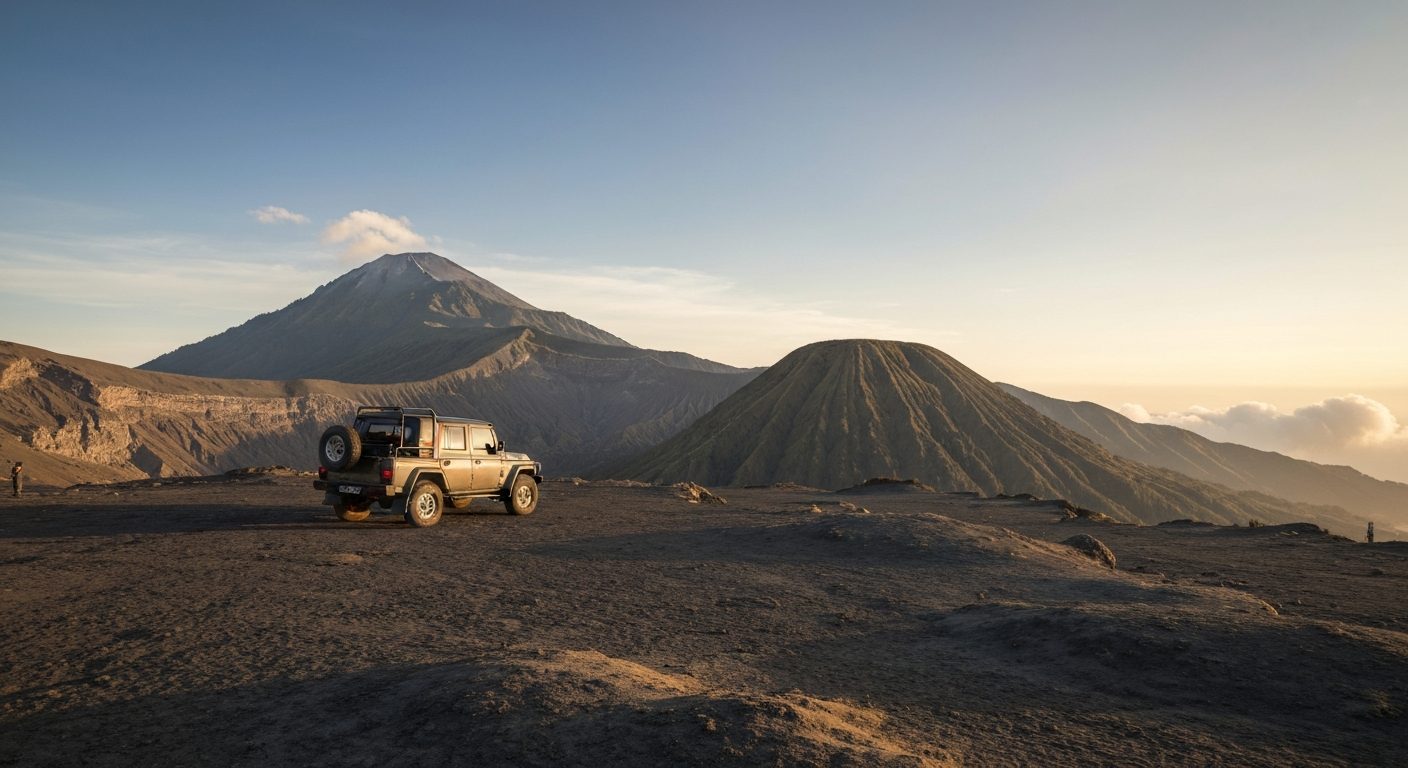
The question of bromo crater floor visit safety is one I hear often. After thousands of early mornings at Bromo, watching the sun paint the caldera and countless travelers make their way to the crater rim, I can tell you plainly: visiting Mount Bromo can be a safe and profoundly rewarding experience, provided you understand and respect the environment and its inherent risks.
Mount Bromo, part of the Bromo Tengger Semeru National Park, is an active volcano. This simple fact defines much of what you need to know about safety here. The truth is, standing on the crater rim, peering into the rumbling maw, involves certain considerations – from the air you breathe to the ground you walk on. This guide will walk you through the practical realities, park rules, and the role of local expertise, answering whether you truly need a guide for your Mount Bromo sunrise crater walk.
Understanding Bromo Crater Floor Visit Safety Concerns
Walking across the vast Sea of Sand and ascending to the bromo crater rim is a highlight for many. However, it’s crucial to acknowledge the specific bromo crater floor visit safety concerns that arise from Bromo’s nature as an active volcano and its unique landscape.
The Active Volcano: What’s in the Air?
Mount Bromo frequently emits white smoke and, at times, more significant plumes of volcanic gas. The primary bromo tour air quality breathing precautions revolve around understanding what these emissions entail.
- Volcanic Gases: The most common gas you might encounter is sulfur dioxide (SO2), which creates a distinct, sometimes pungent, sulfur smell. While usually not immediately dangerous at typical Bromo concentrations, especially in open air, prolonged exposure can be irritating. It often mixes with water vapor to form haze.
- Ash and Dust: The Sea of Sand is, as its name suggests, a vast expanse of volcanic ash and sand. During the dry season (roughly May to October), strong winds can whip up considerable dust. This isn’t volcanic gas, but it can certainly affect air quality and breathing comfort.
- Breathing Precautions: A simple mount bromo volcanic gas safety mask — even a basic surgical mask or a buff pulled over your nose and mouth — is highly recommended. It helps filter out dust and can reduce the irritation from sulfur gases. For those with pre-existing respiratory conditions like asthma or emphysema, or severe allergies, these precautions become even more critical. Carrying an inhaler or necessary medication is essential. I always advise our guests to keep their masks handy, especially on windy days or when standing downwind from the crater.
Sea of Sand: Terrain and Visibility
The journey across the Sea of Sand (Kaldera Tengger) is an iconic part of the Bromo experience. This vast, flat plain stretches for kilometers, a stark, often otherworldly landscape.
- Terrain: The ground here is mostly volcanic ash and sand. While generally flat, it can be soft in places, making walking a bit of a workout. There are designated jeep tracks that traverse this area, guiding vehicles to the base of the crater stairs.
- Visibility: In the pre-dawn darkness, visibility is extremely limited. The jeep headlights cut through the gloom, but once you disembark, it’s dark. Crowds of people, jeeps, and horses move across the plain. This is where local knowledge truly shines. Trying to navigate this area on your own without a clear path or a local operator would be disorienting and potentially unsafe. It’s hard to tell if it is safe to walk to Mount Bromo crater rim when you can barely see the ground in front of you.
- Jeep Requirement: Bromo Tengger Semeru National Park rules and regulations specifically mandate that visitors access the Sea of Sand and the base of Bromo via licensed 4×4 jeeps. Private vehicles are not permitted beyond the entrance gates. This rule is in place for safety, traffic management, and environmental protection.
The Crater Rim Trail: Bromo Crater Rim Safety Regulations and Rules
Once your jeep drops you at the base of the volcano, the final ascent to the rim is on foot. This involves a well-defined path and a set of concrete steps.
- The Stairs: There are approximately 250 concrete steps leading directly to the crater rim. These steps are sturdy, though they can be steep in places. There is a handrail along the side, which is particularly useful in the dark and for those who appreciate extra stability.
- The Rim Path: At the top, a narrow path, often just a meter or two wide, runs along a section of the crater rim. On one side, you have the gaping, active crater. On the other, a steep drop down the outer slope of the volcano.
- Safety Regulations: The bromo crater rim trail ranger safety rules are clear:
- Stay on the designated path: Do not venture off the main trail. The ground beyond the path can be unstable and dangerous.
- Keep a safe distance from the edge: Even on the path, maintain a cautious distance from the crater’s edge. A slip or a sudden gust of wind could have serious consequences.
- Mind the railings: Where railings are present, use them. They are there for your safety. However, not all sections of the rim path have railings, especially further along.
- No littering: Preserve the pristine environment.
- Observe warnings: If rangers or local operators advise against certain areas or conditions, heed their warnings. They are based on real-time assessments of the volcano’s activity.
- Common Bromo Crater Floor Visit Safety Concerns
-
- Volcanic Gas Exposure: Sulfur dioxide and other gases can cause respiratory irritation, especially for sensitive individuals.
- Dust and Ash: Fine particles from the volcanic landscape can be kicked up by wind or crowds, affecting breathing and visibility.
- Slippery or Uneven Terrain: The path to the crater and the rim itself can be loose, sandy, or steep.
- Crowd Management: During peak season, large numbers of visitors can make navigation challenging, particularly on the narrow crater rim.
- Volcanic Activity: As an active volcano, Bromo’s alert level can change, necessitating exclusion zones.
- Low Light Conditions: Pre-dawn visits mean navigating in the dark, increasing the risk of missteps.
Official Guidance: Bromo Alert Level Eruption Status Before Visiting
The most critical factor influencing bromo crater floor visit safety is the volcano’s current bromo alert level eruption status before visiting. Mount Bromo’s activity is monitored 24/7 by Indonesia’s Center for Volcanology and Geological Hazard Mitigation (PVMBG).
PVMBG Alert Levels and What They Mean
PVMBG uses a four-level system to indicate volcanic activity:
- Level I (Normal): The volcano is not erupting and shows no signs of increased activity. This is the typical state for Bromo.
- Level II (Waspada/Vigilant): Increased activity, such as rising seismic tremors or gas emissions. An exclusion zone of 1 km (0.6 miles) from the active crater is usually enforced. Visitors are typically still permitted to the view points and Sea of Sand, but not the crater rim.
- Level III (Siaga/Standby): Further increase in activity, with a higher probability of eruption. The exclusion zone expands, often to 2.5-3 km (1.5-1.8 miles). Access to the volcano and parts of the Sea of Sand may be restricted.
- Level IV (Awas/Alert): Imminent eruption or ongoing eruption. A large exclusion zone, potentially up to 5 km (3 miles) or more, is established. All access to the volcano and surrounding areas is prohibited.
Staying Informed: Your Responsibility, Our Support
Before any visit to Bromo, checking the current PVMBG alert level is paramount. This isn’t just a suggestion; it’s a fundamental part of bromo crater floor visit safety.
- Your Responsibility: While we monitor conditions closely, it is ultimately your responsibility to be aware of the official alert status, especially if you have specific health concerns. The PVMBG website is the authoritative source.
- Our Support: As your private tour concierge, Luxury Bromo Tour (operated by Bali Premium Trip) stays in constant communication with local authorities and our vetted jeep operators. We will always inform you of any changes to the alert level that might impact your itinerary and advise on the safest course of action. If an alert level rises to restrict crater access, we will adjust your tour to focus on safe viewpoints and alternative activities, ensuring your safety remains the top priority.
Do You Need a Guide for Mount Bromo Sunrise Crater Walk?
This is a common question, and the answer is nuanced. While the bromo crater rim trail itself is relatively straightforward with its 250 steps, the broader context of a Bromo sunrise experience makes local expertise incredibly valuable, and in some aspects, essential.
Park: Jeep Operators and Drivers as Your Local Experts
For the core Bromo sunrise and crater experience, you absolutely need a local licensed jeep operator and driver. This isn’t optional; it’s a park rule.
- Mandatory Access: As mentioned, private vehicles cannot enter the Sea of Sand. You must use a licensed 4×4 jeep. These jeeps are operated by local communities and are the only approved mode of transport for traversing the vast caldera and reaching the base of Bromo.
- Route Knowledge: Jeep drivers are experts in often-challenging terrain and the pre-dawn chaos. They know the best routes, how to avoid traffic bottlenecks, and where to park for optimal access to the crater stairs. This knowledge directly contributes to bromo crater floor visit safety by ensuring you get to and from the site efficiently and safely.
- Permit Handling: Our jeep operators, coordinated by Luxury Bromo Tour, handle all necessary park permits and entrance fees, which are included in your tour package. This ensures you comply with all bromo tengger semeru national park rules and regulations without hassle. Your jeep driver is, in essence, your first point of contact and guide for the practicalities of the park. They understand bromo crater rim trail ranger safety rules and will guide you to where it is safe and permitted.
On the Ground: When a Walking Guide Enhances Safety and Experience
While a jeep driver gets you to the base of Bromo, a dedicated walking guide for the crater ascent is technically optional for physically capable individuals. However, I strongly recommend one for a richer and safer experience, especially for first-time visitors or groups.
- Benefits of a Walking Guide:
- Personalized Pace: A guide walks with you, ensuring you ascend the 250 steps at a comfortable pace, offering assistance if needed.
- Crowd Management: On busy mornings, the path to the crater rim can be crowded. A guide can help navigate through the throngs, ensuring you don’t get separated or pushed.
- Local Insights: Guides provide context – the history of the Tenggerese people, their ceremonies, the geology of the volcano. This knowledge transforms a walk into a cultural and educational journey.
- Safety Advice: They offer real-time advice on bromo crater rim safety regulations and rules, pointing out unstable areas or reminding you to keep a safe distance.
- Language Barrier: For many, a guide bridges the language gap, making interactions with local vendors or rangers smoother.
- When It’s Most Recommended:
- First-time visitors: To maximize understanding and minimize logistical stress.
- Families with children or elderly members: For extra support and supervision.
- Travelers with limited mobility or fitness concerns: A guide can adapt the pace and provide encouragement.
- Anyone seeking deeper cultural engagement: To learn about the Tenggerese heritage.
Private Tour Concierge: The Easiest Way to Stay Compliant
Choosing a private, expert-guided tour with Luxury Bromo Tour (operated by Bali Premium Trip) simplifies everything. We coordinate the licensed jeep operators, experienced drivers, and if you opt for one, a dedicated walking guide. Our service ensures you are always on the right side of bromo tengger semeru national park rules and regulations without you needing to worry about the details. We arrange all permits and transfers, ensuring a smooth, safe, and fully supported experience from start to finish.
Practical Steps for a Safe Bromo Crater Walk
Beyond understanding the rules and roles, preparing yourself with the right gear and mindset is key to ensuring your mount bromo crater walk safety and air quality experience is positive.
Essential Gear: What to Pack for Air Quality and Comfort
- Warm Layers: Bromo at sunrise is cold. Temperatures can drop to near freezing, especially at the viewpoints. Pack a warm jacket, hat, gloves, and perhaps a scarf. You can shed layers as the sun rises and you warm up.
- Comfortable Walking Shoes: The terrain is uneven, dusty, and involves steps. Sturdy, closed-toe shoes with good grip are essential.
- Mount Bromo Volcanic Gas Safety Mask: As discussed, a simple surgical mask, N95, or even a bandana/buff is invaluable for dust and volcanic gas.
- Water: Stay hydrated, especially if you’re exerting yourself.
- Headlamp or Flashlight: For navigating in the pre-dawn darkness on the path to the crater. While your phone’s flashlight can work, a dedicated headlamp leaves your hands free.
- Sunscreen and Sunglasses: Once the sun is up, the reflection off the sand can be intense.
- Personal Medication: If you have any health conditions, ensure you carry your necessary medications.
Respecting the Rules: Bromo Tengger Semeru National Park Rules and Regulations
Adhering to park rules is not just about avoiding fines; it’s about preserving this incredible natural wonder and ensuring everyone’s safety.
- Stay on Marked Paths: This is crucial for your safety and to protect the fragile ecosystem.
- No Littering: Carry out everything you carry in.
- Respect Local Culture: The Tenggerese people consider Bromo a sacred place. Be mindful of any ceremonies or rituals.
- No Disturbing Wildlife: Though sparse, the park has some wildlife. Observe from a distance.
- Follow Ranger Instructions: Bromo crater rim trail ranger safety rules are in place for a reason. Always follow directions from park rangers or local authorities.
Luxury Bromo Tour: Your Partner in Safe & Smooth Exploration
At Luxury Bromo Tour, operated by Bali Premium Trip, we believe that true luxury lies in seamless, worry-free travel. My team and I have spent years ensuring every detail of your Bromo experience is handled with precision. We partner exclusively with licensed, vetted local jeep operators and drivers who know the terrain, the rules, and the best practices for bromo crater floor visit safety. We secure your permits, coordinate your transfers, and provide expert guidance every step of the way. You book directly with our Bali Premium Trip reservations team at transparent, published rates, ensuring no third-party markups and clear communication.
We arrange every piece of the puzzle – from comfortable transfers from your hotel to the expert guidance of our local partners on the ground. This allows you to focus entirely on the awe-inspiring experience of Mount Bromo, knowing that all logistical and safety considerations are expertly managed.
Ready to experience Bromo with complete peace of mind? Plan your trip with us today. Our team is available via WhatsApp to answer all your questions and craft the perfect itinerary.
Disclaimer: General Safety Information Only
The information provided in this guide regarding mount bromo crater walk safety and air quality is for general informational purposes only and is not intended as medical, emergency, or licensed advice. Mount Bromo is an active volcano with inherent risks. Individuals with pre-existing medical conditions (such as asthma, heart conditions, or other respiratory issues), or anyone facing an elevated PVMBG alert level, must consult with a qualified medical professional and defer to official Bromo Tengger Semeru National Park (BTSNP) and PVMBG (Center for Volcanology and Geological Hazard Mitigation) announcements and regulations before planning or undertaking a visit. Luxury Bromo Tour and Bali Premium Trip are not medical professionals and cannot provide medical advice.
Is it safe to walk to Mount Bromo crater rim?
Yes, it is generally safe to walk to the Mount Bromo crater rim when the volcano is at a normal alert level (PVMBG Level I). The path involves approximately 250 well-maintained steps. However, it’s crucial to stay on the designated trail, maintain a safe distance from the crater’s edge, and follow all bromo crater rim safety regulations and rules provided by park rangers or your guide. The primary concerns are volcanic gases, dust, and the narrowness of the rim path, which can be mitigated with a mask and careful walking.
What are the main bromo crater floor visit safety concerns?
The main bromo crater floor visit safety concerns include exposure to volcanic gases (primarily sulfur dioxide, which can irritate the respiratory system), high levels of dust and ash, uneven and sometimes crowded terrain in low light conditions, and the inherent risks of being near an active volcano. Adhering to the current PVMBG alert level and following park regulations are essential for mitigating these concerns.
Do you need a guide for Mount Bromo?
You are required to use a licensed local jeep operator and driver to access the Sea of Sand and the base of Mount Bromo due to park regulations. While a separate walking guide for the crater ascent is technically optional for physically capable individuals, it is highly recommended for enhanced bromo crater floor visit safety, navigation, local insights, and overall experience, especially for first-time visitors, families, or those seeking extra support.
How much does a Bromo crater visit typically cost?
The costs for a Bromo crater visit typically involve national park entrance fees and jeep hire. As of June 2026, foreign visitor entrance fees range from approximately IDR 220,000 (weekdays) to IDR 320,000 (weekends/holidays), which is roughly US$15-22 per person. A private jeep for a Bromo sunrise tour (including the Sea of Sand and crater base) typically costs between IDR 600,000 – 800,000 per jeep (fitting up to 6 passengers), or about US$40-55. These are indicative ranges and can vary by season and specific services included in a tour package.
What bromo tour air quality breathing precautions should I take?
For bromo tour air quality breathing precautions, it is strongly recommended to carry and wear a mount bromo volcanic gas safety mask (a simple surgical mask or N95 is sufficient) to filter out dust and reduce irritation from sulfur dioxide. A buff or bandana can also provide some protection. If you have any respiratory conditions, consult your doctor and carry necessary medication like an inhaler. Avoid standing directly downwind from the crater vents for extended periods, especially on windy days.
Your safe and incredible journey to Mount Bromo is our priority. Contact Luxury Bromo Tour today via WhatsApp or through our website to plan your trip with the confidence that every detail is handled by experts.