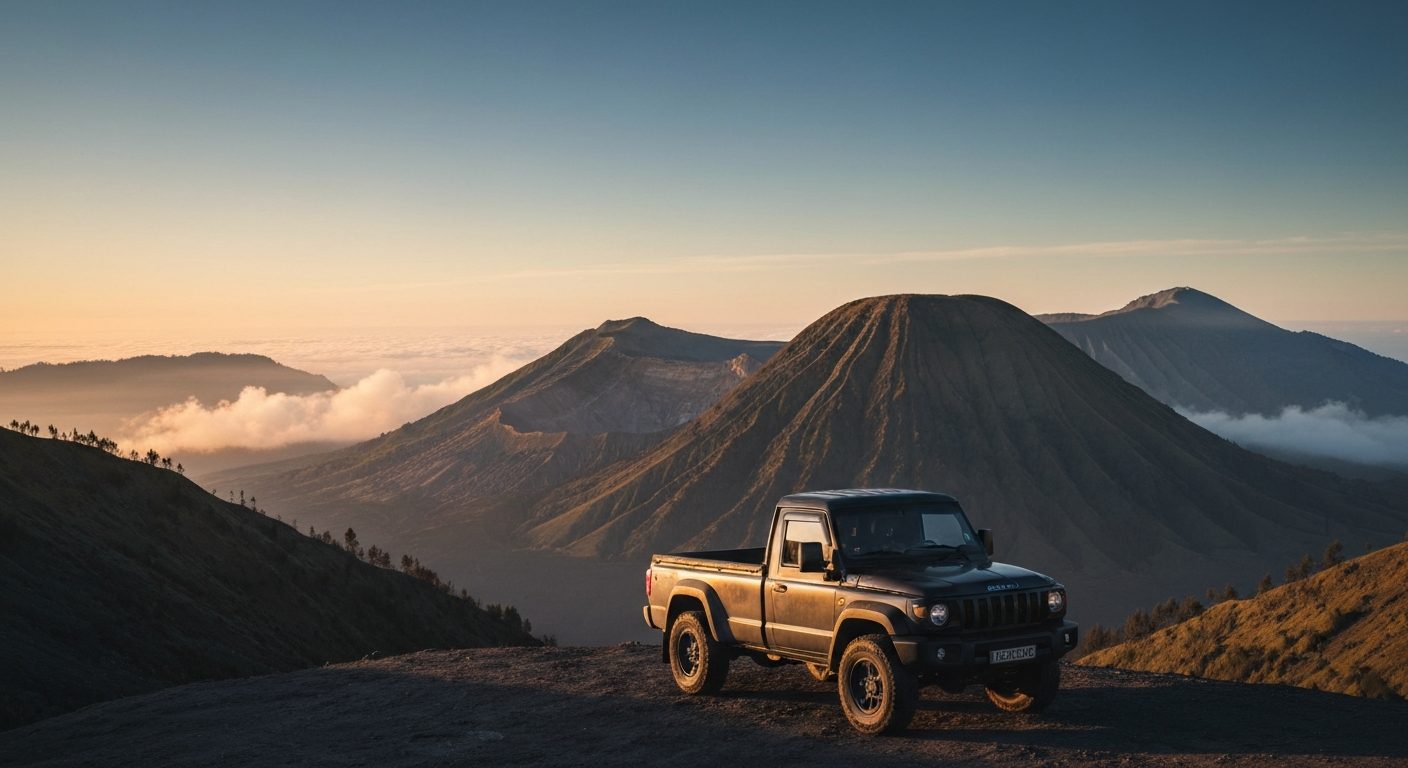
As Luxury Bromo Tour Editorial Desk, East Java Travel Editor for Luxury Bromo Tour, I’ve spent over a decade guiding travelers to Mount Bromo, timing hundreds of sunrises. For those aiming to capture the dramatic first light over the Tengger caldera, mastering bromo sunrise photography tips is key to securing truly memorable images. This guide offers a practitioner-credible field manual, detailing camera settings, lens choices, and optimal locations for capturing the iconic Bromo sunrise, the smoking crater, and even the Milky Way.
Mount Bromo is an active volcano at the heart of the Tengger massif, part of the Bromo Tengger Semeru National Park in East Java. Its desolate “Sea of Sand” and the colossal caldera provide an extraordinary canvas for photographers. Each morning, visitors gather at various viewpoints to witness the sun illuminate the landscape, painting the sky with colors that shift from deep indigo to fiery orange and soft gold. This isn’t just about pressing a shutter; it’s about understanding the light, the landscape, and the logistics to be in the right place at the right time.
Capturing Mount Bromo’s Dawn Majesty
Mount Bromo presents unique photographic challenges and rewards. The air is often cold and thin, especially before dawn. Crowds can be substantial at popular viewpoints. Dust from the volcanic ash can affect gear. Yet, the rewards are immense: otherworldly landscapes, a constantly smoking volcano, and skies that transform with incredible speed. For photographers, this means preparation, precision, and patience are paramount.
Why Bromo is a Photographer’s Dream
The volcanic landscape of Bromo is unlike almost any other. The vast, flat expanse of the Sea of Sand, officially known as Tengger Caldera, stretches out before the cluster of volcanoes: Mount Batok, Mount Kursi, and the active Mount Bromo itself. Looming in the distance is Mount Semeru, East Java’s highest peak, often emitting its own plume of smoke. This geological drama, combined with the dynamic light of sunrise and the clear night skies, makes Bromo a premier destination for landscape and astrophotography. Capturing the scale, the textures, and the raw power of nature here demands specific techniques and an understanding of the environment.
Understanding Bromo’s Light Cycle for Photography
To truly master bromo sunrise photography tips, you must understand the progression of light. It’s not just about the moment the sun crests the horizon; the hours before and after are equally, if not more, photogenic.
Pre-Dawn: Blue Hour and Astrophotography
The pre-dawn hours, often referred to as “blue hour,” offer a magical quality. The sky deepens to rich blues, purples, and sometimes even greens, contrasting sharply with the silhouettes of the volcanoes. This is also the prime window for mount bromo milky way photography. With minimal light pollution, especially from higher viewpoints, the Milky Way can be strikingly visible on clear nights.
Sunrise: The Golden Moment
As the sun begins to rise, typically between 5:00 AM and 5:30 AM depending on the season, the light changes rapidly. The horizon catches fire, casting warm, golden light across the peaks. This is where your preparedness pays off. You’ll have a brief window, perhaps 20-30 minutes, to capture the most dramatic colors and contrasts. This is the essence of tengger caldera sunrise photography tour objectives.
Morning: The Smoking Crater and Sea of Sand
Once the sun is up, the light becomes brighter and harsher, but new opportunities emerge. The detail in the Sea of Sand becomes visible, with its sweeping dunes and the ancient Hindu temple, Pura Luhur Poten. The plume of smoke from Mount Bromo’s crater becomes more defined against the blue sky, and you can capture the textures and scale of the caldera itself. This phase of the day is crucial for mount bromo photography tour milky way sunset follow-up explorations, even if focusing on morning light.
Key Mount Bromo Photography Spots
Knowing where to position yourself is as critical as knowing your camera settings. Each viewpoint offers a distinct perspective for bromo sunrise photography tips best spots.
- Penanjakan 1 (Viewpoint 1)
- The most famous and highest accessible viewpoint (approximately 2,770 meters above sea level). It offers the classic, panoramic vista of the entire Tengger caldera, with Mount Bromo, Mount Batok, and Mount Semeru aligned beautifully. Expect crowds, especially during peak season. Securing a prime spot often requires arriving very early, sometimes by 3:00 AM.
- King Kong Hill
- Located slightly lower than Penanjakan 1 (around 2,680 meters), King Kong Hill offers a similar sweeping view but from a slightly different angle. It tends to be less crowded than Penanjakan 1, making it a favorite for photographers seeking a bit more space and flexibility. The foreground here can also be interesting, with gnarled trees and volcanic rock adding character.
- Seruni Point
- A tiered viewpoint closer to Cemoro Lawang, offering a good view with a dedicated staircase. It’s often a backup if Penanjakan 1 and King Kong Hill are too congested, or for those who prefer a shorter hike from the jeep drop-off point.
- The Sea of Sand (Tengger Caldera)
- After sunrise, jeeps descend into the caldera. This vast, ash-covered plain provides opportunities for wide-angle shots emphasizing scale, details of the Pura Luhur Poten temple, and dramatic compositions with Bromo’s smoke plume. The jeep ride itself through the sand can be photogenic.
- The Crater Rim of Mount Bromo
- A hike up Bromo’s slopes leads to a precarious, often windy, crater rim. From here, you can photograph the active crater, observing its sulfurous smoke and hearing its rumbling. The views into the caldera from this perspective are also compelling, offering an intimate sense of the volcano’s power.
Essential Camera Settings for Mount Bromo Photography
Understanding your camera’s manual settings is crucial for bromo sunrise photography tips camera settings. These are starting points; always review your shots and adjust.
Blue Hour & Pre-Sunrise Settings
- Aperture: f/4 to f/8. A wider aperture (smaller f-number) lets in more light for astrophotography, while f/8 provides good depth of field for landscapes.
- Shutter Speed: Varies significantly. For astrophotography (Milky Way), 15-30 seconds is common. For blue hour landscapes without stars, 1-10 seconds to blur clouds or smooth water (if applicable).
- ISO: 800-3200 for astrophotography. For blue hour landscapes, 200-800, keeping noise low.
- White Balance: Tungsten (3200K) or Kelvin (set manually to 3000-4500K) to enhance blue tones.
Sunrise & Golden Hour Settings
- Aperture: f/8 to f/16. A narrower aperture ensures maximum depth of field, keeping both foreground and distant volcanoes sharp.
- Shutter Speed: Fast-changing. Start at 1/30s to 1/125s and adjust as light increases. You might use slower speeds (1/2s to 2s) for early sunrise to capture more light before the sun fully appears.
- ISO: 100-400. Keep it as low as possible for best image quality.
- White Balance: Auto (AWB) or Daylight (5500K) to capture natural colors. You can also experiment with Cloudy (6500K) to warm up the image.
Daylight & Crater Rim Settings
- Aperture: f/8 to f/16 for landscapes, f/2.8 to f/5.6 for isolating subjects like temple details.
- Shutter Speed: 1/125s to 1/500s or faster, depending on light conditions and desired motion freeze.
- ISO: 100-200.
- White Balance: Auto or Daylight.
Mount Bromo Milky Way Photography Settings
To capture the Milky Way, you need dark skies, a clear night, and specific camera settings.
- Aperture: f/2.8 or wider (e.g., f/1.8, f/1.4). The widest aperture your lens allows is best.
- Shutter Speed: Use the “500 Rule” or “NFP Rule.” For a full-frame camera and a 14mm lens, this might be around 30 seconds (500/14 = ~35s). For a crop sensor, adjust accordingly.
- ISO: 3200-6400. This is high, but necessary to gather enough light.
- Focus: Manual focus to infinity. Use Live View and zoom in on a bright star to nail focus.
- White Balance: Kelvin 3500-4500K or Tungsten preset.
White Balance Considerations
White balance is often overlooked. Shooting in RAW format gives you the most flexibility to adjust white balance in post-processing. However, getting it close in-camera saves time. Experiment with presets like Daylight, Cloudy, or Shade to see how they affect the mood of your images. Kelvin settings offer precise control; lower numbers (e.g., 3000K) yield cooler, bluer tones, while higher numbers (e.g., 7000K) create warmer, more orange tones.
Bromo Photography Gear & Equipment Tips
Proper equipment is non-negotiable for serious bromo photography tour tips equipment. The environment can be challenging, with cold temperatures, dust, and potential for moisture.
Camera Bodies and Lenses (best lens for bromo sunrise photography)
- Camera Body: A DSLR or mirrorless camera with good low-light performance and manual controls is essential. Full-frame cameras generally excel in high ISO situations.
- Wide-Angle Lens: This is arguably the best lens for bromo sunrise photography and astrophotography. A lens in the 14-24mm range (full-frame equivalent) allows you to capture the vastness of the caldera and the expanse of the night sky. For crop-sensor cameras, look for lenses like a 10-22mm.
- Mid-Range Zoom Lens: A 24-70mm or 24-105mm (full-frame equivalent) is versatile for general landscape shots, isolating features, and capturing the smoking crater from a distance.
- Telephoto Lens: A 70-200mm or 100-400mm lens is useful for compressing perspective, capturing details of Mount Semeru in the distance, or isolating specific elements within the vast landscape. It’s less critical than a wide-angle but can add variety.
Tripods and Remote Shutters
- Sturdy Tripod: Absolutely essential for low-light photography (sunrise, blue hour, Milky Way) where long exposures are required. A lightweight but stable carbon fiber tripod is ideal for travel.
- Remote Shutter Release: Wired or wireless, a remote shutter prevents camera shake when pressing the shutter button, ensuring sharper images during long exposures. Alternatively, use your camera’s 2-second timer.
Batteries and Protection
- Extra Batteries: Cold weather drains batteries faster. Bring at least two, preferably three, fully charged spare batteries. Keep them warm in an inside pocket until needed.
- Headlamp/Flashlight: Essential for navigating in the dark before sunrise.
- Dust and Rain Protection: Volcanic dust is fine and pervasive. Bring a rain cover for your camera and lens, and a microfiber cloth for cleaning. A plastic bag can serve as an emergency cover.
- Warm Clothing: Layers are critical. Temperatures before dawn can drop close to freezing, especially at the viewpoints (e.g., 0-5°C).
The Private Jeep Tour Advantage for Serious Photographers
While group tours exist, a private jeep tour offers significant advantages for photographers seeking optimal conditions for mount bromo photography tour milky way sunset or sunrise. Luxury Bromo Tour, operated by Bali Premium Trip, specializes in tailoring these private experiences.
Early Access and Strategic Positioning
A private jeep allows for earlier departure times, ensuring you reach your chosen viewpoint well before the crowds. This is crucial for securing a prime spot, setting up your tripod without obstruction, and capturing the deep blue hour and any potential astrophotography without light pollution from other vehicles or headlamps. Our drivers understand the need for strategic positioning.
Flexibility and Time
With a private tour, your itinerary is flexible. You dictate the pace. If the light is exceptional at one location, you can spend more time there. If conditions aren’t ideal, you can move to an alternative spot. This flexibility extends to the duration at each site, allowing you to wait for the perfect light, experiment with settings, and get the shots you truly want without feeling rushed by a group schedule.
Comfort and Safety
Our private tours prioritize your comfort and safety. You travel in a well-maintained, private 4×4 jeep with an experienced local driver who knows the terrain and the best routes. This ensures a smoother journey, especially on the rough tracks leading to the viewpoints. We arrange licensed, vetted on-ground operators for your jeep, guides, and permits, ensuring a seamless and reliable experience. This direct arrangement with our Bali Premium Trip reservations team means transparent pricing and no third-party markups.
For an indicative idea, a private 2-day, 1-night photography-focused tour with Luxury Bromo Tour, including private jeep, guide, permits, and quality accommodation, typically ranges from US$350 to US$750 per person, depending on accommodation choices, group size, and specific inclusions. Prices were last verified June 2026 and are subject to seasonal variation.
Planning Your Bromo Photography Expedition
Beyond the gear and settings, practical planning is vital for a successful mount bromo tour photography sunrise spots endeavor.
Best Seasons
The dry season, from April to October, is generally considered the best time for photography. Skies are clearer, increasing the chances of seeing the Milky Way and getting unobstructed sunrise views. The rainy season (November to March) can bring cloud cover, which might obscure the sunrise or the volcanoes, though it can also create dramatic cloudy skies.
Physical Preparedness and Altitude
Mount Bromo’s crater rim is at an elevation of approximately 2,329 meters above sea level, and the viewpoints like Penanjakan 1 are even higher, at around 2,770 meters. The air is thinner, and the climb to the crater rim involves dusty steps. Be aware of your physical limits. Drink plenty of water and move slowly to mitigate the effects of altitude.
Respecting the Environment and Local Culture
The Tenggerese people, who live around Bromo, consider the volcano sacred. Always be respectful of local customs and traditions. Do not litter. Stay on designated paths to protect the fragile volcanic ecosystem. The park entrance fees contribute to the conservation efforts.
Ready to capture the majestic dawn over Mount Bromo? Let us help you plan a private, photography-optimized itinerary. Our team at Luxury Bromo Tour, operated by Bali Premium Trip, specializes in translating complex logistics into clear, personalized plans.
Frequently Asked Questions
What are the ideal times for Bromo sunrise photography?
The ideal window for Bromo sunrise photography begins in the pre-dawn “blue hour,” typically from 4:00 AM, continuing through sunrise around 5:00-5:30 AM, and into the golden hour immediately following. For Milky Way photography, the hours between 1:00 AM and 3:00 AM on a moonless night offer the best conditions.
Do I need a special permit for photography at Mount Bromo?
No special photography permit is required beyond the standard entrance ticket to Bromo Tengger Semeru National Park. However, if you are planning a commercial shoot, specific commercial permits might be necessary. Your private tour operator, Luxury Bromo Tour, will arrange all standard park entrance permits for you.
How cold does it get at Mount Bromo’s viewpoints before sunrise?
Temperatures at the Bromo viewpoints like Penanjakan 1 can drop significantly before sunrise, often ranging from 0°C to 10°C (32°F to 50°F). It is crucial to dress in warm layers, including a jacket, hat, gloves, and warm socks, to remain comfortable while waiting for the sun.
Can I charge my camera batteries during the tour?
While some accommodations near Bromo offer charging facilities, it’s best to arrive with all your camera batteries fully charged. The early morning starts and continuous shooting can drain batteries quickly. Bringing multiple spare batteries, kept warm, is highly recommended.
Is it safe to hike to the Bromo crater rim for photography?
Hiking to the Bromo crater rim is generally safe, provided the volcano’s alert level is low and you follow designated paths. The ascent involves walking across the Sea of Sand and climbing a set of steps. The rim itself is narrow and often windy, so caution is advised, especially when setting up camera gear. Always adhere to park regulations and listen to your guide’s advice.
Connect with our Bali Premium Trip reservations team via WhatsApp to discuss your private Bromo photography jeep tour. We are here to help you plan an experience that prioritizes your photographic goals.