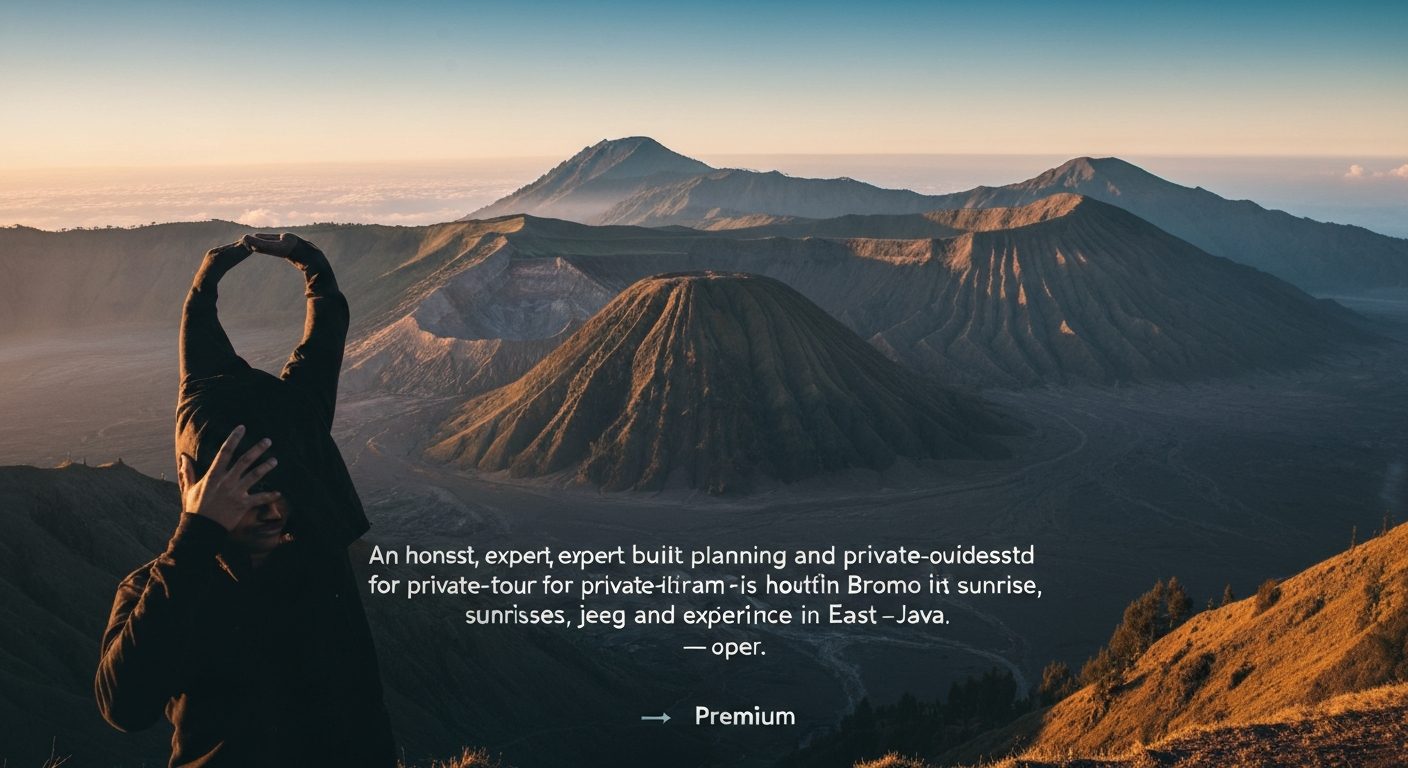
As someone who grew up watching the Bromo caldera breathe and has spent countless 3 AM mornings coordinating tours here, I can tell you plainly: is Mount Bromo safe to visit? Yes, under normal circumstances, it is one of Indonesia’s most accessible active volcanoes. However, “normal” can change quickly, and understanding the real risks and how to prepare makes all the difference for a smooth, safe experience.
Mount Bromo is a magnificent, active volcano, part of the Tengger massif. Its raw power is what draws people from around the world. My job, and the mission of Luxury Bromo Tour, operated by Bali Premium Trip, is to ensure you experience that power safely, with all the right information and support. We don’t just book tours; we manage the logistics, monitor conditions, and partner with vetted local operators to make sure your trip is secure from the moment you consider it.
Understanding Mount Bromo Volcanic Activity and Closure Status
Mount Bromo is continuously monitored by Indonesia’s Center for Volcanology and Geological Hazard Mitigation (PVMBG), specifically through their Magma Indonesia platform. This is the official source for all real-time data and alert levels.
How to Check Mount Bromo Alert Level PVMBG:
The most reliable way to check Bromo’s current status is directly through official channels:
- Magma Indonesia Website/App: PVMBG publishes real-time data, including seismic activity, gas emissions, and visual observations. They issue warnings and define exclusion zones. You can access their public information via the Magma Indonesia website or a dedicated mobile application. It’s in Bahasa Indonesia, but key terms like “Level,” “Status,” and specific exclusion zone distances are generally clear.
- National Park Authority (TNBTS): The Bromo Tengger Semeru National Park authority implements PVMBG’s directives. They are responsible for closing areas, setting access rules, and informing visitors on the ground.
- Local Authorities: Village heads and district officials are also kept informed and will communicate any closures or restrictions to local communities and tourism operators.
Mount Bromo Volcanic Activity Closure Status Levels:
PVMBG uses a four-tiered alert system for active volcanoes. It’s important to know what each means:
- Level I (Normal)
- No significant changes in volcanic activity. Bromo is generally open for visitors, observing standard safety guidelines.
- Level II (Waspada/Vigilant)
- Increased seismic activity or gas emissions. A specific exclusion zone, typically 1 km from the crater rim, might be enforced. Visitors are usually allowed to the caldera rim but not into the crater itself.
- Level III (Siaga/Alert)
- Volcano is showing clear signs of impending eruption. Exclusion zones are significantly expanded, often to 2.5 km or more from the crater. Access to the crater rim and sometimes even the caldera floor (Sea of Sand) is restricted or completely closed.
- Level IV (Awas/Caution/Eruption)
- Eruption is underway or highly probable. Broad areas around the volcano are closed, and local communities may be evacuated. All tourism access to Bromo is strictly forbidden.
Our team at Luxury Bromo Tour constantly monitors these official channels. If you book a private tour with us, we will keep you informed of any changes and adjust your itinerary as needed, always prioritizing your safety. We arrange for licensed local guides who are intimately familiar with the park’s regulations and can provide real-time updates on the ground.
Real Risks: Bromo Volcanic Ash Exposure Risks and Mask Protection
Even when Bromo is at Level I (Normal), it’s an active volcano. That means there are always some inherent risks, primarily from volcanic ash and gases.
Volcanic Ash Exposure:
Fine volcanic ash is always present around the Bromo crater. It’s essentially very fine rock particles. While not immediately dangerous in small quantities, prolonged exposure can be irritating.
- Irritation: Ash can irritate eyes, skin, and especially the respiratory system. It can feel like dust.
- Slippery Surfaces: Ash can make paths and steps very slippery, particularly if it’s damp or mixed with rain.
- Visibility: During periods of higher activity or strong winds, ash plumes can reduce visibility significantly.
Volcanic Gas Exposure:
Bromo emits various gases, predominantly sulfur dioxide (SO2) and hydrogen sulfide (H2S). These gases are usually dispersed quickly by wind, but can concentrate in the crater or in low-lying areas, especially during calm conditions.
- Sulfur Smell: You’ll likely notice a distinct sulfur smell, like rotten eggs, around the crater rim. This is normal.
- Respiratory Irritation: Higher concentrations of gases can cause coughing, throat irritation, and difficulty breathing, particularly for those with existing respiratory conditions.
- Eye Irritation: Gases can also cause eyes to sting or water.
Bromo Volcanic Ash Exposure Risks Mask Protection:
Wearing a mask is not just recommended; it’s essential when visiting the Bromo crater.
- N95/KN95 Masks: These provide the best protection against fine ash particles and can offer some relief from irritating gases. A simple surgical mask offers minimal protection against fine particles. We strongly advise bringing your own N95 or KN95 mask. Our guides will remind you to put it on as you approach the crater.
- Eye Protection: Sunglasses or clear glasses can protect your eyes from ash and wind.
- Always Assess: If the sulfur smell becomes overpowering, or if you experience significant discomfort, move away from the crater rim. Your guide will be monitoring conditions and will advise you.
Mount Bromo Altitude Sickness Symptoms and Prevention
Mount Bromo’s altitudes are not extreme, but they are high enough for some visitors to experience mild altitude sickness symptoms. It’s crucial to be aware and prepare.
Altitude Profile:
- Sunrise Viewpoints (e.g., Penanjakan 1): Typically around 2,770 meters (9,088 feet) above sea level.
- Caldera Floor (Sea of Sand): Around 2,100 meters (6,890 feet).
- Bromo Crater Rim: Approximately 2,329 meters (7,641 feet).
Most visitors arrive at Penanjakan in the early morning, spend time there, then descend to the caldera floor before ascending the ~250 steps to the crater rim. This fluctuating altitude profile, combined with cold temperatures and early starts, can be a factor.
Mild Altitude Sickness Symptoms:
Symptoms are usually mild and include:
- Headache
- Nausea
- Dizziness or lightheadedness
- Fatigue
- Shortness of breath with exertion
- Loss of appetite
- Difficulty sleeping
Severe altitude sickness (High Altitude Pulmonary Edema – HAPE or High Altitude Cerebral Edema – HACE) is extremely rare at these altitudes for healthy individuals.
Mount Bromo Altitude Sickness Prevention:
- Hydrate: Drink plenty of water before and during your trip. Avoid excessive alcohol and caffeine.
- Acclimatize (if possible): If your itinerary allows, spending a night at a lower altitude (e.g., in Malang or Probolinggo) before ascending to Bromo can help. Many of our tours include an overnight stay in a hotel near Bromo, which helps.
- Take it Slow: Don’t rush, especially when climbing the steps to the crater. Pace yourself.
- Listen to Your Body: If you feel unwell, rest. Inform your guide.
- Nutrition: Eat light, digestible meals.
- Medication: Consult your doctor about prophylactic medications like Acetazolamide (Diamox) if you have concerns, especially if you have a history of altitude sickness or pre-existing conditions. This is general travel information, not medical advice.
Who Should Take Extra Care? Is Mount Bromo Hike Safe with Kids?
While Bromo is generally accessible, certain individuals need to exercise greater caution.
Can You Visit Bromo with Asthma Respiratory Problems?
- Asthma/COPD: Individuals with asthma, COPD, or other chronic respiratory conditions should be particularly careful. The fine ash particles and sulfurous gases can trigger attacks or worsen symptoms.
- Consult Your Doctor: Absolutely consult your doctor before planning your trip.
- Carry Inhalers: Always carry your prescribed inhalers and any other necessary medications.
- N95/KN95 Masks: Wear a high-quality mask religiously, especially near the crater.
- Assess Conditions: If volcanic activity is heightened, or if the air quality feels poor, it may be best to view Bromo from a distance rather than approaching the crater. Your guide can advise on conditions.
Is Mount Bromo Hike Safe with Kids?
- Young Children: Hiking to the crater rim can be challenging for very young children due to the cold, early start, and the ~250 steps. The ash and gases can also be irritating to their smaller respiratory systems.
- Consider Age: Children typically older than 5-6 years old generally manage better.
- Physical Fitness: Ensure children are reasonably fit and prepared for an early morning adventure.
- Masks: Ensure they wear appropriate masks near the crater.
- Supervision: Close adult supervision is paramount, especially on the crowded crater steps and near the rim.
- Alternative: If the crater hike seems too much, you can still enjoy the sunrise and the Sea of Sand, avoiding the direct ascent.
- Older Travelers: Older adults, especially those with pre-existing heart or lung conditions, should also consult their doctor. The cold, altitude, and physical exertion can be more taxing. Our private tours can be tailored to your pace, allowing for more breaks and less strenuous options where possible.
Bromo Air Quality Health Concerns:
Beyond volcanic emissions, general air quality can be affected by local factors. While usually good in the highlands, specific conditions (e.g., dry season dust, local burning) can occasionally contribute. Always prioritize wearing your mask near the crater to mitigate immediate concerns.
Health Guardrail: *This information is for general travel guidance only and is not medical advice. Anyone with asthma, heart/lung conditions, pregnancy, or any health concerns should consult a licensed medical doctor before planning a trip to Mount Bromo. Always follow official PVMBG and national park authority instructions on the day of your visit.*
What to Wear Mount Bromo Cold Sunrise Safety
My mornings at Bromo start long before the sun. I can tell you from experience: it gets incredibly cold. Being prepared for the temperatures is not just about comfort; it’s about safety.
Temperatures:
- Pre-dawn at Penanjakan: Can drop to near freezing (0-5°C or 32-41°F), especially during the dry season (May-October).
- Daytime: Once the sun is up, temperatures rise, but it remains cool.
- Wind Chill: The open plains and high altitude mean strong winds can make it feel much colder.
Essential Clothing Layers:
Layering is key. You’ll want to be able to add or remove clothing as temperatures change throughout the morning.
- Base Layer: Thermal underwear (top and bottom) made of moisture-wicking material.
- Mid-Layer: Fleece jacket or warm sweater.
- Outer Layer: A thick, windproof and ideally waterproof jacket.
- Bottoms: Warm trousers. Jeans are not ideal as they retain cold and moisture.
- Headwear: A warm beanie or wool hat is crucial. Most body heat is lost through the head.
- Gloves: Essential for keeping your hands warm, especially while waiting for sunrise.
- Socks: Thick wool or thermal socks.
- Footwear: Sturdy, closed-toe walking shoes or light hiking boots with good grip. The terrain can be sandy, uneven, and slippery.
Other Safety Items to Consider:
- Headlamp or Flashlight: Essential for navigating in the dark before sunrise. Our guides will also have these.
- Small Backpack: To carry water, snacks, extra layers, and your mask.
- Sunscreen and Lip Balm: Even on cold days, the UV radiation at altitude is strong.
- Personal First-Aid Kit: For minor scrapes or headaches. Our guides carry basic kits.
How Luxury Bromo Tour Ensures Your Safety
As Luxury Bromo Tour Editorial Desk, I oversee every detail of our operations to ensure your journey is safe and seamless. Luxury Bromo Tour, operated by Bali Premium Trip, prides itself on meticulous planning and on-ground coordination.
Our Approach to Your Safety:
- Real-time Monitoring: We continuously track official PVMBG updates. If conditions change, we notify you immediately and adjust plans.
- Vetted Local Partners: We don’t own the jeeps or the park concessions. Instead, we work exclusively with licensed, experienced local jeep operators and drivers who know the terrain, the routes, and the local conditions intimately. They are part of the community and understand its rhythms.
- Expert Guides: Our guides are not just escorts; they are knowledgeable locals, many with backgrounds similar to mine, who understand the volcano, its history, and its moods. They are trained in basic first aid and are adept at managing group safety, especially around the crater. They can provide real-time advice on conditions like ash, gas, and crowding.
- Permit Handling: We manage all necessary park permits for you, ensuring legal and authorized access.
- Private Tours: Our private tour model allows for flexibility. We can adjust pace, timing, and even routes to best suit your comfort and safety, especially if you have specific health concerns or are traveling with children. We don’t rush you.
- Transparent Information: We believe in honest communication. We tell you about the cold, the crowds, and the real prices upfront. We’ll never sugarcoat the challenges because informed travelers are safe travelers.
We are not just a booking agent. We are your dedicated concierge, from Bali to Bromo, ensuring every piece fits, just like I do on the ground every morning.
Planning Your Safe Bromo Trip with Luxury Bromo Tour
While Mount Bromo offers an incredible, often spiritual experience, it demands respect and preparation. By understanding the potential risks – volcanic activity, ash, altitude, and cold – and taking appropriate precautions, you can ensure your visit is not only memorable but also safe.
Let us handle the complexities. Our expert team at Luxury Bromo Tour, powered by Bali Premium Trip, will guide you through every step, from pre-trip advice to on-the-ground logistics. We arrange for expert guides, secure all necessary permits, and coordinate reliable transfers, ensuring a smooth and worry-free journey. You book directly with our own Bali Premium Trip reservations team at transparent, published rates with no third-party markup.
Considering a private, expertly guided Bromo adventure?
Plan your trip with us today. Our team is ready to discuss your specific needs and create an itinerary that prioritizes your safety and enjoyment. You can also reach us directly via WhatsApp at +6281128590000 or email [email protected].
Frequently Asked Questions
What is the best time of year to visit Mount Bromo for safety?
The dry season, typically from May to October, is generally considered the safest and most comfortable time to visit. During these months, there is less rain, which means clearer skies for sunrise views, less slippery paths, and generally lower chances of significant ash-related closures. However, even in the dry season, volcanic activity can occur, so always check official alerts.
How much does a private jeep tour at Mount Bromo cost?
The cost for a private jeep tour at Mount Bromo can vary widely based on your starting point, whether it’s part of a larger multi-day package, and the level of service. For an indicative range (last verified June 2026), a complete private Bromo tour package including transfers from Bali, accommodation, local jeep hire, and guide services might range from US$600-1500 per person for a 2-day/1-night or 3-day/2-night experience, depending on inclusions and seasonality. Just the local jeep hire for the sunrise and crater usually costs around IDR 600,000 – 800,000 (approx. US$38-50) per jeep (capacity up to 6 people) not including park entrance fees.
What happens if Mount Bromo is closed due to volcanic activity on my tour date?
If Mount Bromo’s crater or specific viewing points are closed due to heightened volcanic activity, our team will inform you immediately. We will work with you to adjust your itinerary, which might involve viewing Bromo from a safe, permitted distance, visiting alternative attractions in the area, or rescheduling your trip if feasible. Your safety is our paramount concern, and we will always adhere to official park and PVMBG directives.