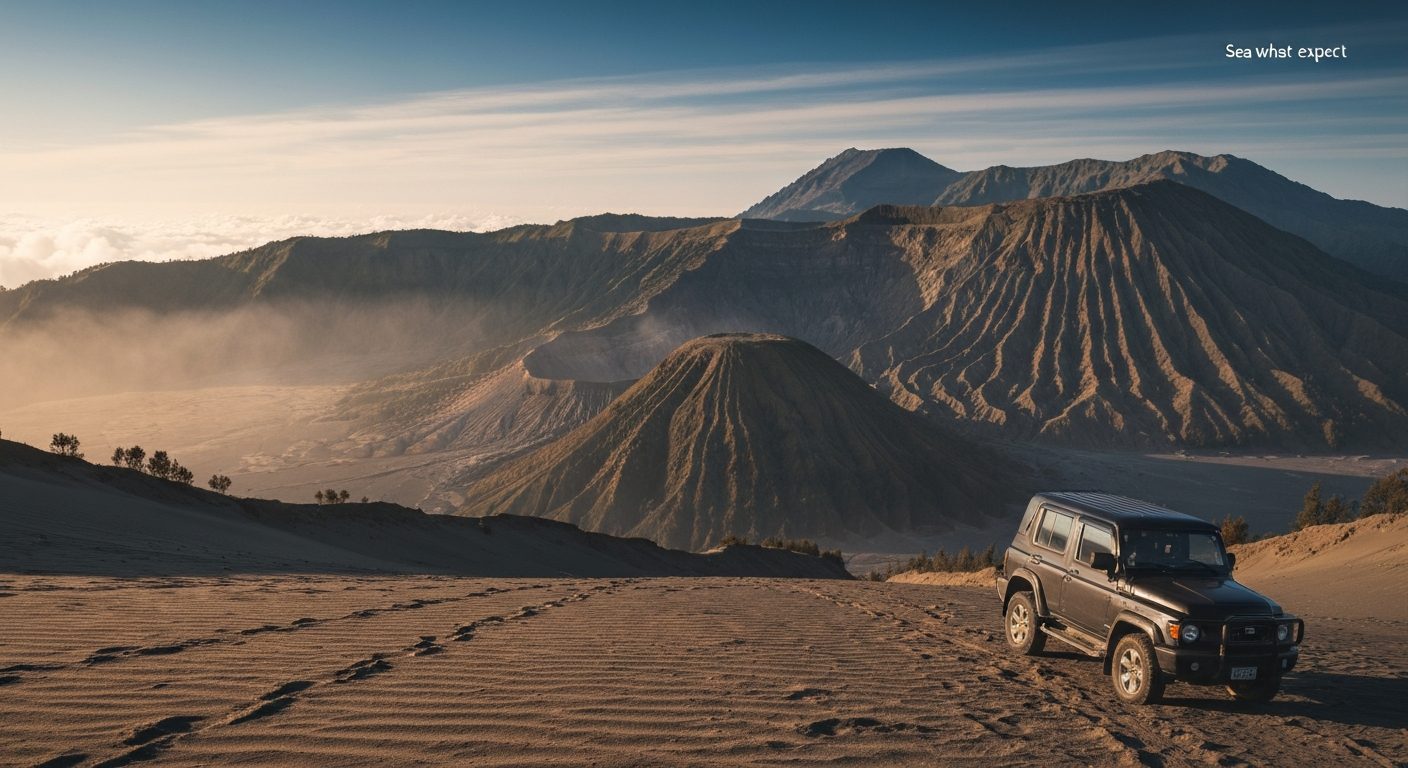
Understanding the Sea of Sand Bromo is key to a rewarding visit. This guide explains precisely what to expect when you cross the vast, ash-covered floor of the Tengger caldera on your way to Mount Bromo’s crater.
As a travel editor who has navigated these landscapes for over a decade, timing countless sunrises for guests, I’ve learned that clear expectations are as important as a well-maintained jeep. The Sea of Sand, known locally as Pasir Berbisik or “Whispering Sands,” is more than just a path; it’s the immersive middle act of a Bromo sunrise experience. It’s where the scale of the Tengger caldera truly becomes apparent, and where the raw power of nature is palpable underfoot. From the moment your jeep descends into this ancient basin, you enter a world unlike any other.
What is the Sea of Sand (Pasir Berbisik)?
The Sea of Sand is the immense, flat floor of the ancient Tengger caldera, a vast basin created by a colossal volcanic eruption tens of thousands of years ago. It sprawls for approximately 10 kilometers across, a desolate yet captivating expanse of fine volcanic ash. This isn’t just a sandy desert; it’s a dynamic landscape, constantly reshaped by winds and the subtle movements of the active volcanoes within it.
The name Pasir Berbisik, or “Whispering Sands,” is evocative. On windy days, the fine ash shifts and drifts, creating soft, sibilant sounds as it sweeps across the plain. It’s a sound that connects you directly to the geological forces at play here. When you stand on this plain, you are literally standing on the remnants of past eruptions, surrounded by the towering walls of the caldera and the younger, active volcanoes that have emerged from its floor: Mount Bromo, Mount Batok, and Mount Kursi.
The terrain is generally flat but not entirely smooth. It’s covered in dark grey to black volcanic sand, sometimes interspersed with small rocks or solidified ash formations. After rain, the surface can be firmer; during dry periods, it’s incredibly dusty. Visibility can range from crystal clear to quite hazy, especially if the wind picks up or if there’s significant volcanic activity.
- Elevation
- The Sea of Sand sits at an approximate elevation of 2,100 meters (6,890 feet) above sea level. This altitude contributes to chilly mornings and often clear, crisp air, though dust can reduce visibility.
- Composition
- Predominantly fine volcanic ash and sand, dark grey to black in color. This porous material absorbs water quickly, preventing standing puddles but can become heavy underfoot when wet.
- Size
- The Tengger caldera itself is vast, with the traversable Sea of Sand plain extending several kilometers in every direction. From the jeep entrance to the base of Bromo’s crater ascent is roughly a 5-7 kilometer drive.
- Atmosphere
- Ethereal, desolate, often quiet save for the wind. The scale is immense, making humans feel small against the backdrop of the towering caldera rim.
Your Sea of Sand Bromo Tour: Jeep Access and Routes
Accessing and Sea of Sand is almost exclusively done via 4×4 jeeps. These rugged vehicles are the lifeblood of any Sea of Sand Bromo tour, capable of handling the loose ash and occasional uneven terrain that ordinary vehicles cannot. This controlled access helps preserve the delicate environment and manage the flow of visitors.
Driving Through Pasir Berbisik: The Jeep Experience
Your Bromo Sea of Sand jeep tour experience typically begins after sunrise viewing from a viewpoint like Penanjakan 1 or King Kong Hill. From there, jeeps descend into the caldera. The descent itself offers dramatic views of the vast plain stretching out below, with Mount Bromo and its siblings rising majestically from the center.
Once on the caldera floor, the jeeps follow established tracks. While there are no paved roads here, experienced local drivers know the safest and most efficient routes. The journey across the Pasir Berbisik Bromo tour section is an adventure in itself. You’ll feel the jeep rumble and slide slightly on the loose ash. Dust is a constant companion, especially if multiple jeeps are moving together. It’s an immersive, sensory experience: the smell of volcanic dust, the distinct sound of the tires on the sand, and the ever-present vastness of the landscape.
Jeep capacities typically range from 4 to 6 passengers, not including the driver. For private tours, you will have the jeep exclusively for your party, ensuring comfort and flexibility. This means no waiting for strangers, no cramped conditions, and the ability to make stops for photographs at your discretion, rather than being rushed by a larger group’s schedule. Our vetted local operators provide well-maintained jeeps and drivers who are experts in navigating this unique environment.
The main route across the Sea of Sand leads directly to the base of Mount Bromo, where you disembark for the trek to the crater. However, depending on your itinerary and time, jeeps can also navigate to other points within the caldera, such as the savanna or the “Teletubbies Hill” area.
Understanding Sea of Sand Bromo Vehicle Access
Park regulations strictly control Sea of Sand Bromo vehicle access. Only authorized 4×4 vehicles (jeeps) are permitted to enter and traverse the caldera floor. This is crucial for safety, environmental protection, and managing visitor impact. Private cars, motorcycles, or other non-4×4 vehicles are not allowed beyond specific entry points into the national park, often requiring transfer to a jeep. This system ensures that all visitors experience the caldera safely and uniformly.
The cost for jeep hire is typically included in our comprehensive private tour packages. For those arranging components independently, a private jeep rental for the Bromo sunrise and caldera tour generally costs in the range of IDR 700,000 – IDR 1,000,000 (approximately US$45 – US$65) per jeep (not per person), depending on the season and specific route requested. This price is for the jeep itself and covers the standard sunrise viewpoint, Sea of Sand crossing, and Bromo crater visit. These rates were last verified in June 2026.
Beyond the Sands: The Tengger Caldera Tour Experience
The Tengger caldera offers more than just the Sea of Sand and Mount Bromo’s crater. It’s a diverse landscape, and a comprehensive Tengger caldera tour experience often includes visits to other captivating spots within its vast expanse.
The Savanna Landscape: “Teletubbies Hill”
Tucked away on the southeastern side of the caldera, shielded from the immediate volcanic ash, lies the Bromo savanna. This area is a stark contrast to the barren Sea of Sand. Here, rolling hills are covered in vibrant green grass, especially during the rainy season (roughly November to April). Locals affectionately call it “Teletubbies Hill” due to its undulating, almost whimsical appearance, reminiscent of the children’s TV show landscape.
Visiting the Bromo savanna landscape trekking area offers a peaceful interlude. The air feels fresher, and the silence is often profound, broken only by the wind or distant bird calls. It’s a popular spot for photography, with the green hills providing a soft, natural backdrop against the more rugged volcanic peaks. Jeeps can drive to designated parking areas, allowing for short, gentle walks through the grass. While not a strenuous trek, it’s a chance to stretch your legs and appreciate a different facet of the Tengger caldera’s beauty.
The Whispering Sands and the Bromo Volcanic Ash Sea of Sand Crater
The journey culminates at the base of Mount Bromo itself, where the Bromo volcanic ash Sea of Sand crater ascent begins. After your jeep parks, you walk across a final stretch of the Pasir Berbisik to reach the concrete stairs leading up to the crater rim. This final walk on the ash feels significant – you are literally treading on the fresh deposits of Bromo’s recent activity.
The path is well-trodden, but the loose volcanic ash can make it feel like walking on a beach. It’s important to wear appropriate footwear. The ascent via the stairs is manageable for most fitness levels, but it is steep in sections, comprising approximately 250 steps. From the top, the view into Bromo’s active crater is powerful. You’ll see and hear the sulfurous gas hissing from within, a stark reminder of the living earth beneath your feet. The panoramic views of the entire Tengger caldera, with the Sea of Sand stretching out below and the other volcanic peaks standing guard, are truly expansive.
Trekking the Caldera Floor: Optional Routes and Considerations
While most visitors experience the Sea of Sand from a jeep and then trek directly to Bromo’s crater, there are optional Tengger caldera trek route options for those seeking a deeper, more immersive experience. These typically require more time and a higher level of fitness, and are best undertaken with a knowledgeable local guide.
Short Treks from Jeep Drop-off
The most common “trek” is the walk from the jeep drop-off point to the base of Bromo’s stairs, approximately 1.5 kilometers (just under a mile) each way. This is a relatively flat walk across the volcanic ash. It can feel longer than it is due to the altitude and the soft ground. Expect it to take around 20-30 minutes, depending on your pace.
Longer, Guided Trekking Routes
For adventurous trekkers, it’s possible to undertake longer routes across the caldera floor, sometimes combining jeep travel with extended walks. For example, some routes explore the periphery of the Sea of Sand, offering different perspectives of the caldera walls and the surrounding peaks. A full traverse of the caldera floor from one entrance point to another (e.g., from the Probolinggo side towards the Malang side, or vice-versa) is a multi-hour endeavor, covering distances of 10-15 kilometers. Such treks require:
- Physical fitness: While mostly flat, walking on soft ash for extended periods is taxing.
- Experienced guide: Essential for navigation, safety, and understanding local conditions. The caldera can be disorienting, and weather can change rapidly.
- Proper gear: Sturdy trekking shoes, layers of clothing, sun protection, and plenty of water are non-negotiable.
These longer treks are not typically part of standard sunrise tour packages but can be arranged as bespoke additions to a private itinerary. Discuss these options with our Bali Premium Trip reservations team when planning your trip; we can tailor a plan that aligns with your fitness level and interests, engaging our vetted local guides to lead the way.
Essential Preparations for the Sea of Sand
The Sea of Sand, while beautiful, is an exposed and often dusty environment. Proper preparation will significantly enhance your comfort and enjoyment. I’ve seen countless guests under-dressed or unprepared, and it always impacts their experience. Don’t be one of them.
What to Wear
- Layers: Mornings are cold, often near freezing (0-5°C or 32-41°F), especially before sunrise. Once the sun is up and you’re active, temperatures rise quickly (15-25°C or 59-77°F). Start with a warm base layer, add a fleece or sweater, and a windproof/waterproof outer jacket.
- Warm Hat, Gloves, Scarf: Essential for the pre-dawn cold.
- Sturdy, Closed-Toe Shoes: Hiking boots or robust athletic shoes are best. The volcanic ash is fine and gets everywhere. Sandals or open-toed shoes are a poor choice.
- Long Pants: Protect against dust and cold.
What to Bring
- Dust Mask/Bandana: Crucial. The volcanic ash is fine and can be irritating to breathe, especially from jeep exhaust and wind.
- Sunglasses: Protect your eyes from dust and the intense sun.
- Sunscreen: Even on cloudy days, the high altitude means stronger UV radiation.
- Water: Stay hydrated, especially if you’re trekking.
- Small Backpack: To carry your layers as you shed them, water, and camera gear.
- Camera: Of course! The landscapes are incredibly photogenic. Protect your gear from dust.
- Small Cash: For snacks or facilities at the base of Bromo, though our private tours aim to cover most needs.
Weather and Conditions
The dry season (May to October) generally offers clear skies and less rain, making for ideal conditions. However, dust can be more prevalent. The rainy season (November to April) brings greener landscapes, especially in the savanna, but also higher chances of rain, which can make the ash heavier and paths muddier. Volcanic activity can also impact access. Mount Bromo is an active volcano; park authorities may close access to the crater rim during periods of heightened activity. Our team monitors these conditions diligently to ensure your safety and adapt itineraries if necessary.
Logistics & Planning Your Private Tour
logistics of a Bromo trip, especially for first-time visitors or families, can seem daunting. This is where a private, expert-guided tour truly shines. We translate the messy on-the-ground realities into clear, seamless plans.
Luxury Bromo Tour, operated by Bali Premium Trip, specializes in private, expert-guided Bromo tours. We don’t own park concessions; instead, we arrange all aspects of your trip through our own dedicated team and a network of licensed, vetted on-ground operators. This includes:
- Expert Guides: Knowledgeable local guides who speak excellent English and understand the area deeply.
- Private Transfers: Comfortable, air-conditioned vehicles for all your ground transportation from your starting point (e.g., Surabaya, Malang, or even direct from Bali).
- Jeep Hire: Exclusive 4×4 jeeps for your party within the national park.
- Permits & Fees: All national park entry fees and necessary permits are pre-arranged and included.
- Accommodation: Hand-picked accommodations that meet our standards for comfort and convenience.
You book directly with our Bali Premium Trip reservations team at transparent rates. There are no third-party markups for you. We work closely with our local partners who provide services like jeep rentals and guiding; these partners may pay us a referral fee, but this does not affect the price you pay. Our focus is on providing a high-quality, seamless experience with expert guidance, ensuring you can relax and fully immerse yourself in the natural grandeur of Bromo.
Consider a private tour for its flexibility: you set the pace, dictate stops, and receive personalized attention, avoiding the chaos and inflexibility of large group tours. This is particularly valuable when traversing the Sea of Sand, where crowds can sometimes detract from the serene atmosphere.
Ready to experience the Sea of Sand and the majesty of Mount Bromo for yourself? Our Bali Premium Trip reservations team is here to help you plan every detail. Reach out to us via our contact page or through WhatsApp for personalized assistance.
Frequently Asked Questions About the Sea of Sand & Tengger Caldera
Is the Sea of Sand difficult to cross?
Crossing the Sea of Sand by jeep is generally not difficult. The 4×4 vehicles are designed for the terrain. The walk from the jeep drop-off to Mount Bromo’s crater base, and then up the stairs, is a moderate effort. It’s mostly flat but on soft, uneven volcanic ash, which can be tiring, especially at altitude. Allow 20-30 minutes for the walk to the stairs, plus 15-20 minutes for the climb up the 250 steps.
Can I walk across the entire Sea of Sand?
While technically possible for very fit trekkers, walking across the entire Sea of Sand is not recommended for most visitors. It’s a vast distance (several kilometers) on soft, uneven ash, and can be disorienting without a guide. Most visitors use jeeps to traverse the main sections and then walk the final 1.5 km to the crater base. For longer treks, a private, expert-guided arrangement is essential for safety and navigation.
What is the best time of year to visit the Sea of Sand?
The dry season, from May to October, is generally considered the best time to visit the Sea of Sand. During these months, the weather is typically clearer, with less rain and lower humidity, making for better visibility and more comfortable conditions for the sunrise and trekking. However, this also means more dust. The rainy season (November to April) brings lush green landscapes to the savanna but can also mean muddy conditions and occasional fog or rain that might obscure views.
How much does it cost to enter the Bromo Tengger Semeru National Park?
National park entry fees vary depending on the day of the week and whether you are a domestic or international visitor. For international visitors, the fee typically ranges from IDR 220,000 to IDR 320,000 (approximately US$14 – US$21) per person. These fees are usually included in our private tour packages, so you won’t need to handle them separately. Prices were last verified in June 2026 and are subject to change by park authorities.
Is it safe to visit Mount Bromo?
Mount Bromo is an active volcano, and safety is paramount. Park authorities continuously monitor volcanic activity. During periods of heightened activity, access to the crater rim may be restricted or closed. Our tours prioritize your safety, and our local guides are always informed about the latest park advisories. We will adjust itineraries as necessary to ensure a safe and enjoyable experience. Generally, when access is permitted, following guide instructions and staying on designated paths ensures a safe visit.
Your journey across the Sea of Sand is a fundamental part of the Bromo experience, a moment of deep connection with the raw, untamed beauty of East Java. Let us help you plan this incredible adventure with confidence and comfort.